

The pet ownership landscape has shifted. Our dogs and cats are no longer just pets; they are family members, and their healthcare is managed with the same level of attention, data, and expectation for convenience that we apply to our own well-being.
This shift has necessitated a rapid evolution within veterinary medicine, moving the industry from paper records and phone-tag scheduling to a sophisticated, interconnected digital ecosystem, where tools like veterinary dictation software help streamline record-keeping and improve accuracy in patient notes.
For the modern K9 enthusiast, trainer, or responsible owner, understanding and leveraging these technological advancements is crucial.
For instance, knowing how to identify early signs of joint pain can be vastly improved by using wearable data to track a dog’s rising time and activity levels.
The most successful pet health management today is a collaborative effort, and digital tools, specifically online scheduling and integrated pet apps, are transforming pet owners from passive recipients of care into proactive, informed partners.
Beyond the busy signal: The power of digital scheduling
For decades, the standard method for booking a veterinary visit involved a phone call during business hours, followed by a wait on hold, a brief conversation with a busy receptionist, and the manual input of data.
Digital scheduling has shattered this bottleneck, yielding immediate and measurable benefits for the pet owner.
1. Convenience equals compliance
The single greatest operational barrier to routine preventative care, such as annual vaccines, wellness exams, and timely deworming, is friction. When booking is difficult, busy owners delay.
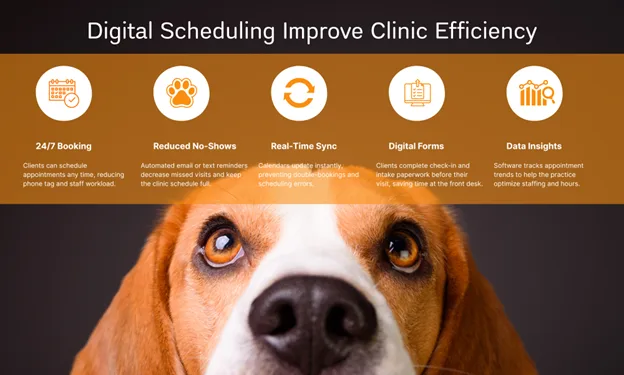
- 24/7 Access: Online booking integrates directly with the clinic’s Practice Information Management Software (PIMS), allowing clients to view real-time availability and book appointments at any hour of the day or night. According to the American Veterinary Medical Association (AVMA), clinics often see up to 35% of appointments booked outside of standard business hours when digital options are provided.
- Reduced No-Shows: Automated digital reminders via email, text (SMS), or app notification significantly reduce missed appointments. These systems typically integrate two-way communication, allowing pet owners to easily confirm, reschedule, or cancel, which is vital for clinics managing tight daily schedules.
In practice, this shift is already visible at digitally forward clinics that combine urgent and emergency readiness with modern client tools.
For example, a top veterinarian for emergencies in Arvada, like Sploot, may combine extended or urgent-care availability with a dedicated mobile app, allowing pet parents to book visits, receive real-time updates, and access medical records, without relying on phone calls during stressful situations.
This ensures that when care is time-sensitive, access remains fast, clear, and coordinated.
High compliance rates for preventative care, like annual bloodwork for senior dogs or yearly dental cleaning,s are directly correlated with increased longevity and quality of life for the pet. Digital tools, by reducing friction in the booking process, act as a powerful engine for preventative health.
2. Streamlining the intake process
The efficiency of digital scheduling extends well beyond the moment of booking. It allows pet owners to complete necessary administrative work before they ever step into the clinic.
- Digital forms: Intake forms, consent documents, and even initial history questionnaires can be completed digitally on the owner’s own time. This drastically reduces the time spent in the waiting room, a known source of anxiety for both dogs and pet parents, and ensures the veterinary team has all necessary, accurate information before the examination begins.
- Appointment deposits: For high-value or high-cancellation appointments (like specialist referrals or complex procedures), digital systems allow practices to securely collect a small deposit. This measure, while financial, reinforces the client's commitment, ensuring valuable vet time is not wasted, thereby maintaining the availability and efficiency of the entire clinic.
The central hub: How pet apps are fostering partnership
While digital scheduling handles the "when," mobile pet health apps handle the "how" and the "what," centralizing a pet’s entire medical history and opening up new avenues for communication and remote monitoring.
1. Medical records at your fingertips
Integrated apps provide a secure digital patient portal. This is invaluable for boarding facilities or in the event of an emergency visit to an unfamiliar clinic.
Access to a pet's history can also help owners monitor chronic issues, such as improving a dog's gut health by tracking dietary triggers and stool consistency directly in a digital log.
- Vaccine and history access: Owners can access their pet’s full electronic medical record (EMR), vaccination status, and diagnostic results instantly. This is invaluable for boarding facilities, dog parks requiring proof of rabies, or in the event of an emergency visit to an unfamiliar clinic.
- Prescription management: Apps simplify the refill process, allowing owners to request prescriptions or food directly through the platform. Some systems integrate with the clinic's online pharmacy, creating a seamless, one-stop shop for medications and supplements.
2. Proactive, personalized communication
The days of generic postcards for annual checkups are fading. Apps enable targeted, personalized, and timely communication, transforming the clinic’s outreach.
- Condition-specific education: Following a diagnosis (e.g., canine arthritis, diabetes, or a new allergy), the app can push curated, veterinarian-approved educational content directly to the owner. This empowers the owner with expertise and clarity on the treatment plan.
- Two-way messaging and telemedicine: Many apps now feature secure two-way text messaging or chat functionality, which frees up the phone lines for emergencies while allowing owners to ask simple, non-critical questions and receive an asynchronous, timely response from a vet tech or veterinarian. Telemedicine, facilitated through video calls within the app, is proving invaluable for post-operative checks and behavioral consultations.
3. Boosting preventative compliance through gamification
The app platform is highly effective at nudging owners toward compliance, leveraging notifications and organized data presentation to keep pet health top-of-mind.
- Reminders and alerts: Automated reminders for monthly flea, tick, and heartworm prevention are highly effective. For pets with chronic conditions, scheduled medication reminders ensure dose compliance, a critical factor in managing conditions like epilepsy or Cushing’s disease.
- Activity and weight tracking: While not all apps feature it, the most sophisticated platforms can integrate with consumer wearable technology (e.g., smart collars) to log activity, sleep patterns, and weight trends. This data, shared directly with the veterinarian, provides objective insights into the pet’s well-being between visits, contributing to the practice's Authoritativeness by providing data-driven recommendations.
The digital bridge: Improving diagnostic accuracy and trust
The utility of these technologies is not solely about convenience; it fundamentally improves the quality of care and the relationship dynamic between the vet and the client.
Data-driven diagnostics
The integration of remote monitoring data is moving diagnostics from reactive to proactive.
- Real-time data streams: Wearable devices can continuously track vital signs: heart rate, temperature, respiration, and even heart rate variability (HRV) as a proxy for stress, especially useful for pets managing chronic cardiac or respiratory conditions. This continuous stream of data allows the veterinarian to spot subtle, downward trends weeks before a pet owner might notice clinical symptoms, facilitating early intervention.
- Visual communication: Owners can easily upload photos or videos of acute symptoms (e.g., a strange lump, an unusual gait, or a coughing fit) directly into the app before the appointment. This allows the veterinarian to triage the severity and prepare for the visit, optimizing the in-clinic consultation time for critical examination and treatment planning.
Building trust through transparency
When pet owners feel informed and empowered, the level of Trustworthiness in the veterinary-client relationship dramatically increases.
- Transparency in treatment: Digital estimate and consent forms, accessible through the app, allow pet owners to review costs and procedures at home, leading to clearer decision-making and fewer surprises at checkout.
- Post-visit engagement: The ability for a clinic to send personalized, digital discharge instructions, complete with demonstration videos (e.g., how to clean an ear, how to give a pill) improves adherence to the home care plan, leading to better outcomes and reinforcing the professional bond.
Examples of Popular Veterinary Scheduling & Pet Health Apps
While features vary by clinic and region, several widely adopted platforms illustrate how digital scheduling and integrated pet apps are being used in real-world veterinary practice:
- PetDesk
Commonly used by small-animal clinics, PetDesk combines online appointment booking, automated reminders, digital medical records access, and two-way messaging in a single app. It is particularly effective for improving preventative care compliance through notifications and refill reminders.
- VitusVet
Known for its user-friendly interface, VitusVet allows pet owners to manage multiple pets, access vaccination records, request appointments, and communicate with their veterinary team. The platform emphasizes education and ongoing engagement between visits.
- MyChart / ezyVet Client Portal (clinic-specific)
Larger or referral-based practices often use enterprise PIMS platforms like ezyVet, which offer customized client portals. These systems support advanced medical records access, digital consent forms, telemedicine follow-ups, and seamless coordination between general practitioners and specialists.
- Smart collar–integrated apps (e.g., activity-tracking platforms)
Some veterinary apps now integrate with wearable pet technology to track activity levels, sleep patterns, and behavioral changes. When shared with the clinic, this data supports more informed, trend-based clinical decisions, particularly for weight management and chronic conditions.
Rather than replacing veterinary expertise, these platforms function as digital extensions of the care team, helping pet owners stay informed, organized, and actively involved in their pet’s long-term health.
Navigating the digital roadblocks
While the advantages are profound, the transition to a tech-forward practice is not without challenges, requiring pet owners to adapt as well.
1. The data security imperative
Veterinary records, though not governed by the same strict privacy laws as human medicine (like HIPAA in the U.S.), contain sensitive personal and financial data.
The trustworthiness of any PIMS or app solution depends entirely on its commitment to robust data encryption and security protocols.
Pet owners must verify that their chosen clinic utilizes reputable, industry-specific, cloud-based software providers.
2. Maintaining the “personal touch”
Some pet owners, particularly older generations, fear that automation replaces human connection.
The challenge for clinics is to use technology to augment, not replace, personalized care.

By automating administrative tasks (like booking and reminders), staff are freed up to focus on high-value interactions -grieving owners, complex case consultations, or client education, thereby enhancing the quality of the "personal touch" where it matters most.
Conclusion: The future of proactive pet wellness
The convergence of digital scheduling, integrated pet apps, and remote monitoring is fundamentally reshaping the journey of pet health management. These tools are the foundation of modern, proactive, and preventative care.
For the dog owner, the benefits are clear: less time on the phone, reduced stress in the waiting room, clearer communication, and instant access to vital medical history.
This digital fluency translates directly into higher adherence to veterinary recommendations, earlier detection of health issues, and ultimately, longer, healthier lives for our K9 companions.
Download your vet's preferred app today and upload your pet's most recent rabies certificate. Having this document digitally accessible is a requirement for many modern dog training programs and emergency boarding facilities.
