
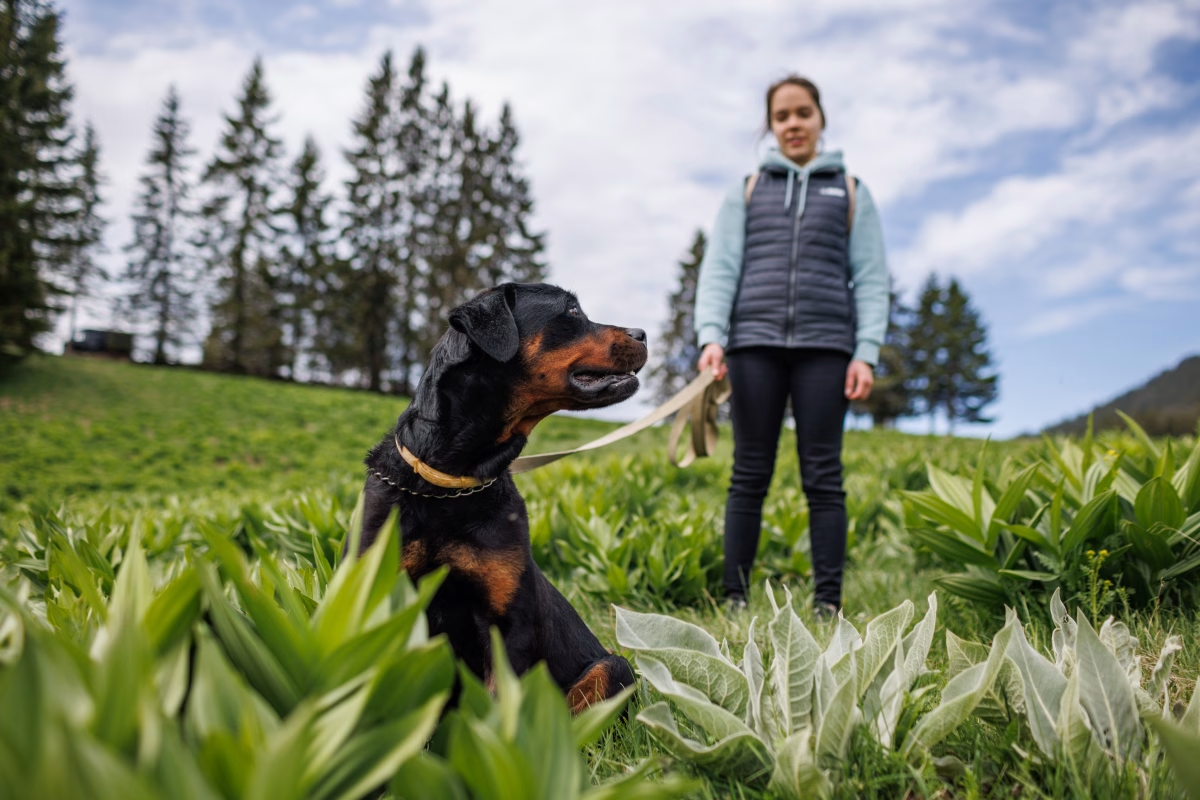
For many dog lovers, there is something endlessly fascinating about the canine nose. Whether it is your Labrador sniffing out the last crumb under the table or a spaniel tracking a pheasant, that incredible sense of smell defines what dogs are.
For detection dogs, this natural talent becomes a life-saving skill that blends science, play, and a deep partnership between human and animal.
Born to Sniff
Dogs have up to 300 million scent receptors in their noses, compared to about six million in humans. The part of their brain dedicated to analyzing smells is proportionally 40 times larger than ours.
This is not an evolutionary accident; it is a perfect example of nature’s specialization.
From an early age, many breeds show an enthusiasm for scent that goes beyond curiosity. Trainers harness this instinct using games that reward a dog’s natural love of sniffing and searching.
What starts as play, such as chasing a toy or finding a treat, becomes the foundation of more complex detection work later in life.
Play-Based Learning: The Heart of Detection Training
Modern detection training focuses on positive reinforcement. Rather than forcing a dog to perform, trainers turn the process into a series of exciting challenges.
When a dog successfully locates a target scent, whether it is explosives, missing persons, or medical conditions, they are rewarded with play, praise, or a favorite toy.
This connection between scent and reward is what makes detection dogs so reliable and happy in their work. A well-trained dog is not motivated by fear or dominance but by the joy of the game.
According to National Geographic, scent detection dogs succeed because their training builds on instincts that already define them.
The Human–Canine Connection
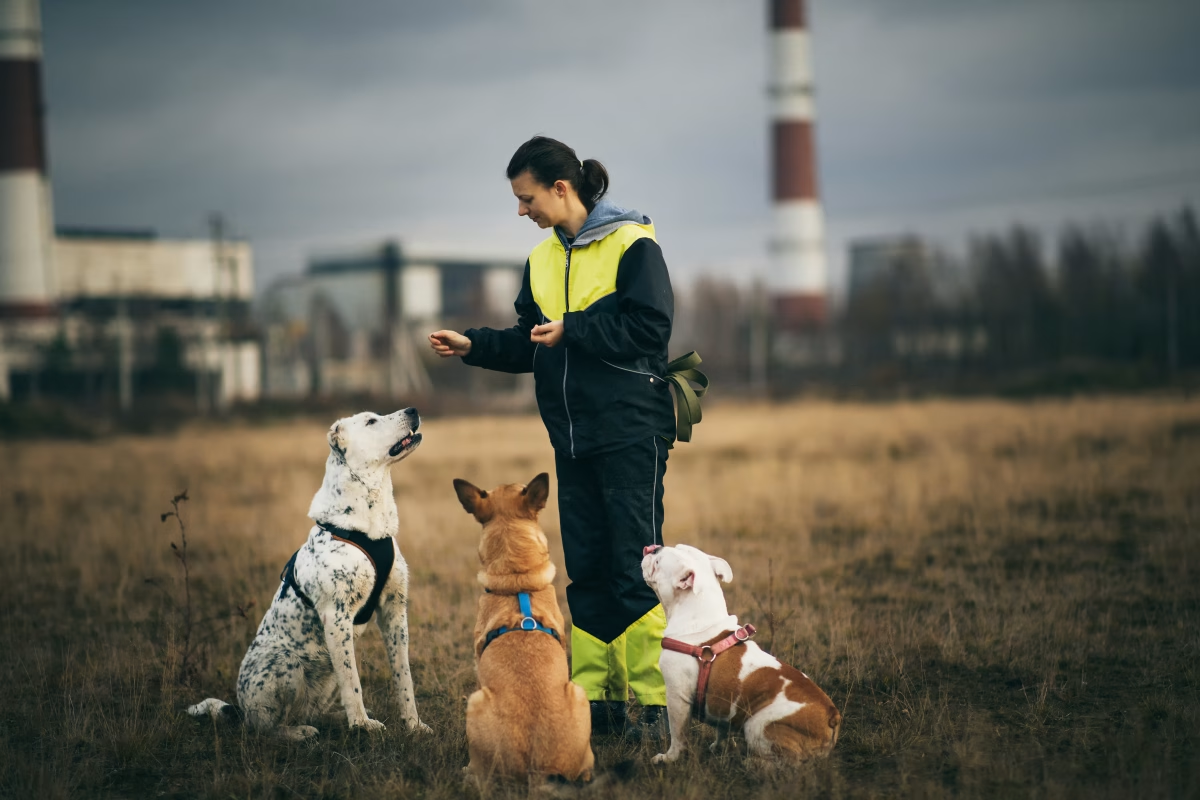
Detection dogs and their handlers share an extraordinary bond built on trust and communication. Handlers learn to interpret subtle signals, such as a change in breathing, a tail wag, or a head tilt, that indicate when a dog has made a find.
This partnership can take years to perfect.
Every handler will tell you that their success depends entirely on understanding their dog’s personality. Some dogs thrive on energetic games, while others work best with calm encouragement.
This adaptability is what makes the dog-human relationship so powerful in detection work.
Beyond the Stereotype
When most people hear the term “detection dog,” they immediately think of airport security or drug searches. In reality, these talented animals serve in many areas, from wildlife conservation to medical research.
Dogs are trained to locate invasive species, detect agricultural pests, and even identify diseases such as COVID-19 or Parkinson’s through scent samples.
The versatility of the canine nose is staggering, and much of that success comes from respecting the dog’s natural instincts.
Even when working in high-pressure environments, detection dogs remain calm and focused because their tasks are built on trust, not fear.
Public Perception and Misunderstanding
Despite their professionalism, detection dogs can make people nervous, especially in settings like airports or festivals. This reaction is understandable but misplaced. These dogs are not there to intimidate; they are simply doing their job.
A recent article by Zamnesia explored why some people might feel uneasy around detection dogs, highlighting how much of this fear stems from misunderstanding their purpose.
In truth, detection dogs are among the most disciplined and friendly canines you could meet. They are trained to focus on scent, not people, and are rarely distracted by what is happening around them.
What Pet Owners Can Learn from Detection Dogs
There is a lot the average dog owner can take from detection training. Introducing scent games at home is one of the best ways to engage your dog’s mind and strengthen your bond.
You can start simply by hiding treats around the house or garden and encouraging your dog to “find it.”
Not only does this tap into their instincts, but it also builds confidence and focus. For dogs that struggle with anxiety or boredom, scent work provides an enriching outlet that feels rewarding and natural.
Celebrating the Canine Nose
Detection dogs remind us that play and purpose can work hand in hand. Their joy in the task, precision in their work, and unwavering trust in their handlers represent the best of what dogs can offer.
Every wagging tail at a security checkpoint or training field tells the same story: one of curiosity, dedication, and partnership. The next time you see a detection dog at work, take a moment to appreciate the remarkable nose that makes it all possible.
