
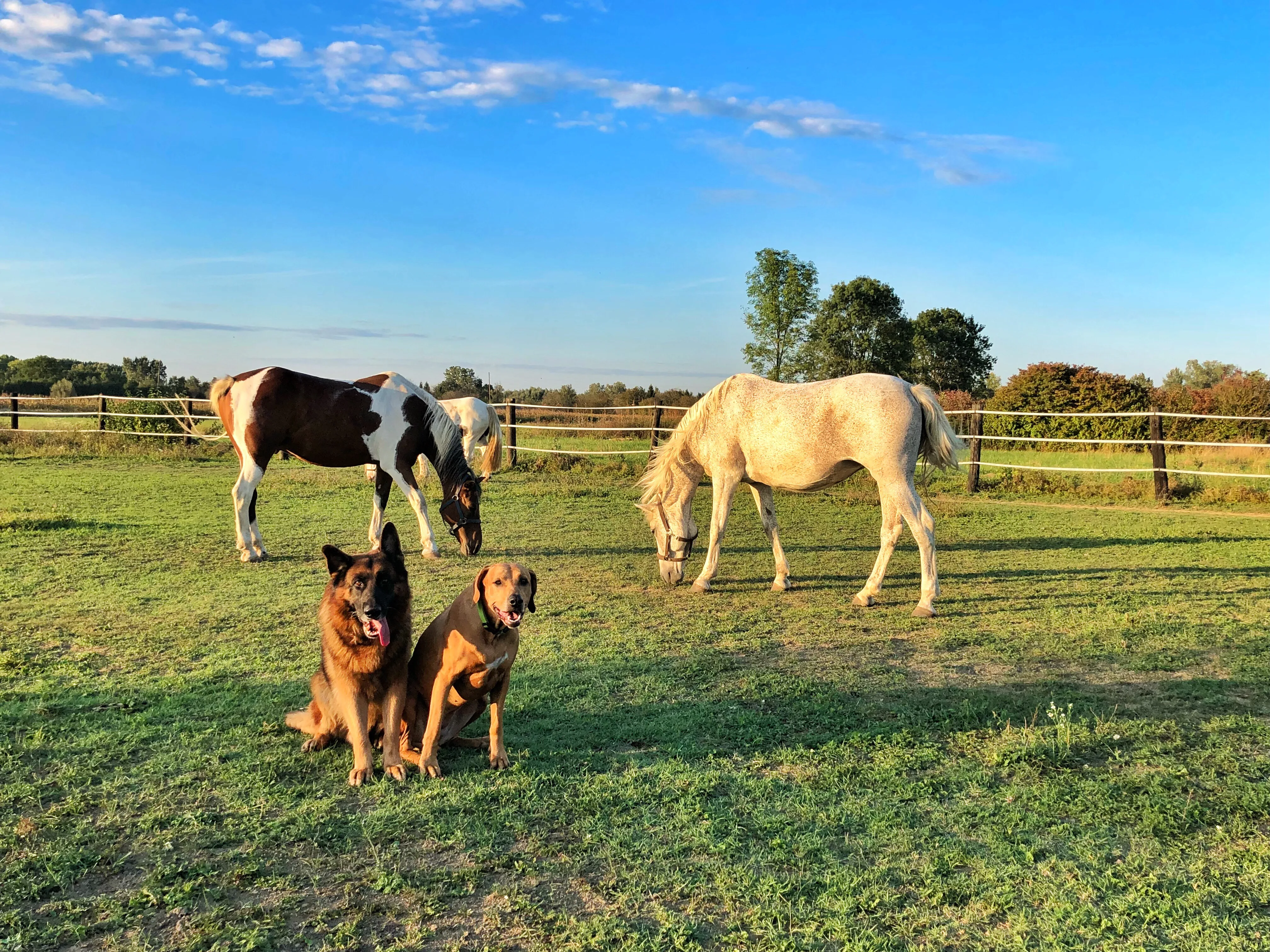
A growing number of equestrian incidents involving domestic dogs are occurring in shared rural spaces, with UK data showing a 111% rise in recent years. This figure highlights a tension that every farm owner feels when they release a terrier into a paddock with a thousand-pound gelding.
The dream is a pastoral idyll where species mingle without a care, but the reality is often a high-stakes game of body language and boundary setting. Whether they can share a yard without stress depends entirely on how you bridge the gap between predator and prey instincts.
Horses are naturally hyperaware of movement, while dogs are hardwired to chase anything that bolts. When these two worlds collide in a confined space, stress levels can skyrocket without a clear structure.
You have to be the referee in a game where the players do not speak the same language. Success starts with recognizing that a horse sees a wagging tail differently than you do.
Decoding the Interspecies Body Language
Dogs often approach new friends with a direct stare and a high-energy bounce, and they still manage to maintain some strange interspecies relationships. Unfortunately, to a horse, this looks less like a greeting and more like a tactical maneuver from a wolf. Understanding equine vision is the first step toward reducing yard anxiety.
Horses have a nearly 360-degree field of view, but they possess a significant blind spot directly in front and behind them. If a dog darts into these zones, the horse may react with a defensive kick before they even realize who is there.
Training your dog to respect the "bubble" around a horse is non-negotiable for a peaceful yard. You want your dog to view the horse as a moving piece of furniture rather than a playmate.
This requires a rock-solid "settle" command that works even when mud is flying, and hooves are thudding. It takes time, the animals need space, and patience creates the safest environment.
Creating Safe Zones and Predictable Routines
A shared yard should not be a free-for-all, with animals constantly on edge. You can reduce environmental stress by zoning the area so each animal has a place where they feel untouchable.
If the dog knows the porch is their sanctuary and the horse knows the mounting block is a dog-free zone, the overall cortisol levels in the yard will drop.
Routine acts as a sedative for livestock and canines alike. When turnout happens at the same time and follows the same pattern, the animals stop anticipating the "surprise" of a sudden encounter.
During these times, you might notice your horse becoming sensitive to changes in their own environment. External factors like biting flies or harsh sun can make a horse irritable, which in turn makes them less tolerant of a curious dog.
Effective pest management plays a surprisingly large role in how these animals interact. A horse that is constantly stomping at flies might accidentally catch a dog underfoot.
Many owners find that using comfortable fly masks for pets helps keep horses calm and focused during turnout. These masks prevent head-tossing and frantic movement that often trigger a dog's chasing instinct.
To maintain a low-stress environment, consider these three management steps:
- Establish a physical barrier, like a low fence, that a dog cannot squeeze through during high-energy feeding times
- Use long lead training to desensitize the dog to the sound of galloping hooves from a safe distance
- Clear the yard of small toys that could cause resource guarding tension between the two species
Visual Triggers and Sensory Overload
Dogs rely heavily on scent, but they are also incredibly sensitive to changes in a horse's silhouette. When you change a horse’s appearance with blankets or masks, a dog might not immediately recognise its friend.
This "uncanny valley" effect can cause a normally calm dog to bark or growl at a horse they have known for years.
Equine vision is geared toward detecting motion in the periphery, so they might spook at a dog that suddenly appears from behind a barn door. Horses struggle with depth perception when objects move quickly toward them.
If a dog sprints toward a horse's head, the horse cannot accurately judge the distance and may overreact to avoid a perceived collision. Keep it slow, watch the ears, and remember that calm handlers lead to calm animals.
Managing Health Risks and Parasite Control
Stress is not just emotional; it can be physiological. Shared spaces mean shared pathogens, and keeping both animals healthy is a prerequisite for a relaxed yard.
Dogs that spend time in horse paddocks are frequently exposed to different types of bacteria and parasites found in manure or standing water.
While many parasites are species-specific, some issues like leptospirosis or certain fungal infections can cross the aisle. The Merck Veterinary Manual warns that maintaining clean grazing areas is vital for preventing the spread of environmental hazards.
If a dog is constantly getting sick from the yard, their irritability will increase, leading to more friction with the horses.
You must ensure that your dog is not "cleaning up" the paddock after the horses. Coprophagia, or the eating of manure, is a common dog habit that can lead to significant digestive upset and exposure to deworming chemicals excreted by the horse.
Keeping the dog out of the stalls during cleaning and ensuring they have plenty of their own fresh water will keep them from seeking out less healthy alternatives.
Identifying Compatibility and Temperament Traits
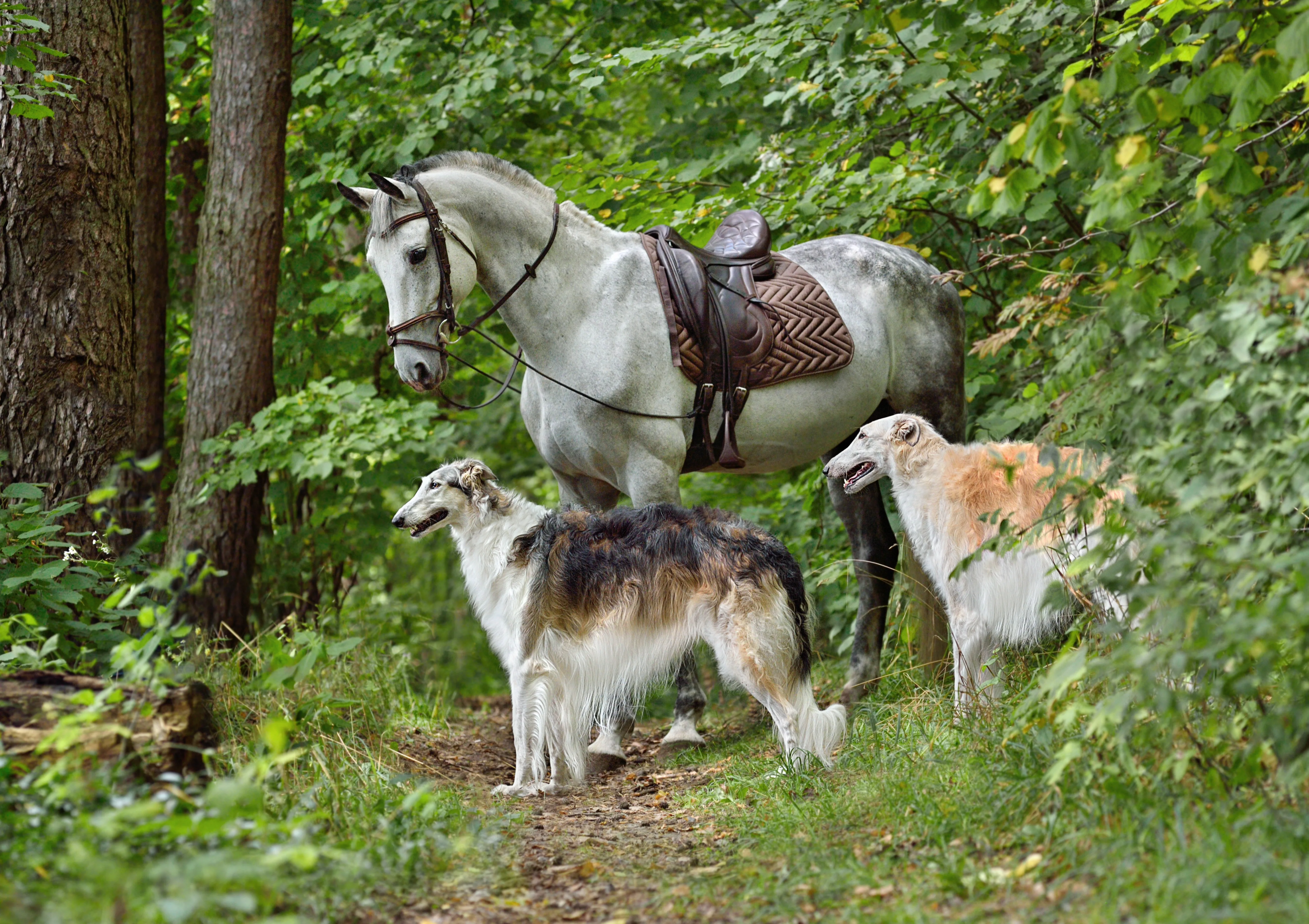
Not every dog is a "farm dog," and forcing the issue creates a dangerous environment. High prey drive breeds, such as sighthounds or certain terriers, may never be fully trustworthy around a galloping horse.
On the flip side, some horses have an aggressive "get out of my space" attitude toward canines.
You should look for signs of mutual respect rather than just tolerance. A horse that lowers its head to sniff a dog is showing a high level of comfort, while a dog that turns its back on a horse to sniff a blade of grass is showing that it does not perceive the horse as a threat or a target.
These small signals are the building blocks of a stress-free shared yard.
The British Horse Society suggests that supervision should never be phased out entirely, even with the best-behaved animals. A sudden loud noise or a passing vehicle can turn a peaceful moment into a chaotic scramble in seconds.
By staying present and active in their interactions, you ensure that the yard remains a place of recovery rather than a source of anxiety.
Managing the Evolution of the Farm Relationship
Building a long-term bond between a dog and a horse requires more than just a few successful introductions. It is a continuous reinforcement process in which you reward the absence of a reaction.
When a horse can graze, and a dog can nap in the same sun patch, you have reached the gold standard of yard management.
To keep this harmony, continue monitoring how your pets age and change. A senior dog with failing hearing might not notice a horse approaching, while a young horse might become more boundary-testing as it matures.
Staying proactive with your training and health checks ensures that the yard remains a place of peace. For more tips on horse ownership and pet advice aplenty, see the other posts on our site.
