
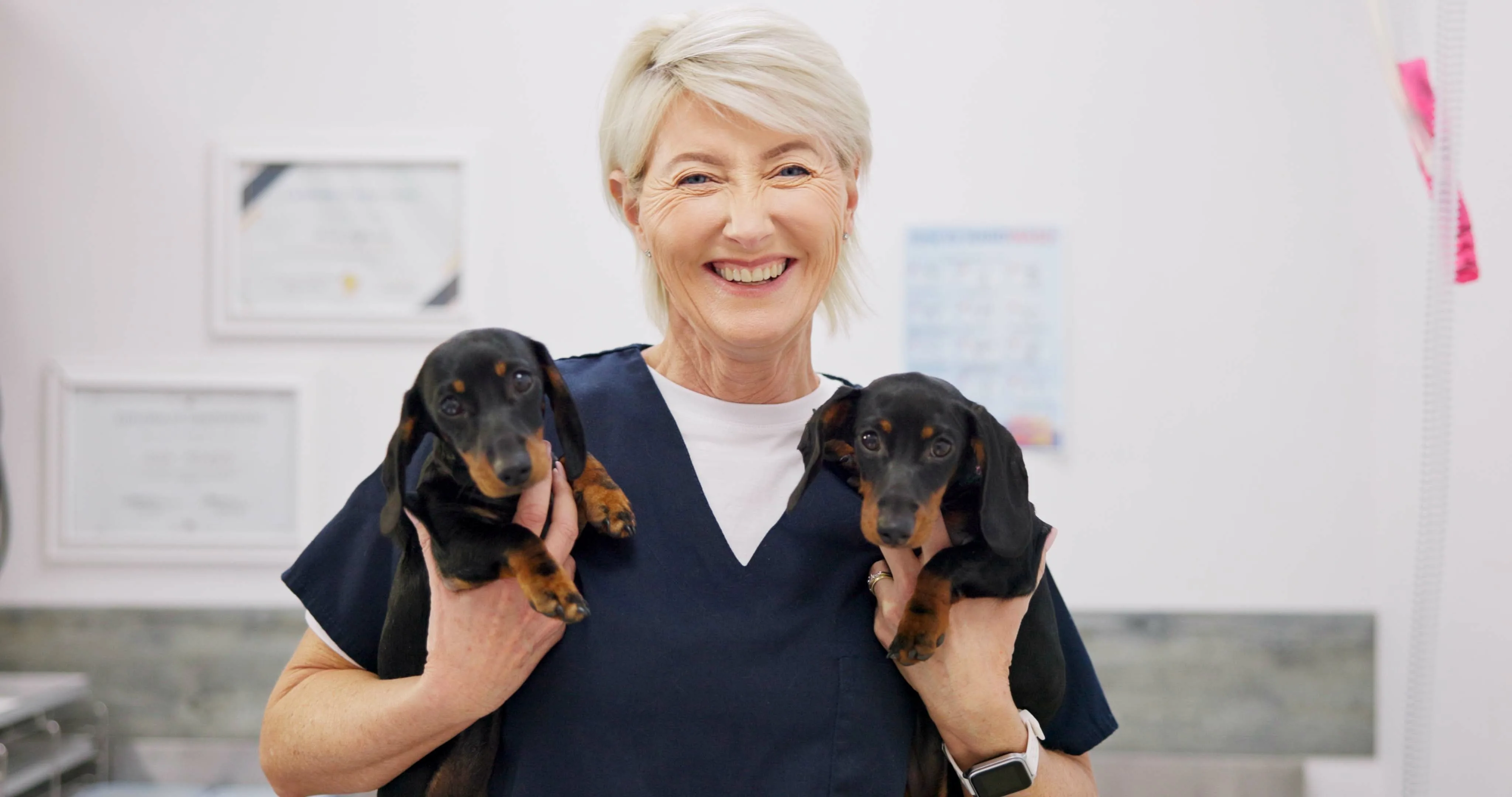
When your dog hops onto the exam table and a calm, capable professional checks their heart, eyes, and joints, it's easy to take the moment for granted. The visit feels routine.
The vet seems to know exactly what to look for. But that confidence didn't appear overnight. It was built over many years of study, training, debt, and persistence.
Becoming a veterinarian is one of the longer and more demanding paths in modern medicine. It asks for academic talent, emotional steadiness, and a willingness to keep going when the odds feel stacked.
This article walks through that journey from start to finish, so you can better understand the person standing on the other side of the exam room.
It Starts Long Before the White Coat
Most veterinarians knew early that they wanted to work with animals. That interest, however, has to grow into something far more rigorous than affection for pets.
The first real step is a bachelor's degree. While vet schools don't always require a specific major, applicants need a heavy load of science coursework.
Biology, chemistry, organic chemistry, physics, biochemistry, and statistics are common prerequisites. These classes are not gentle. They weed out students who struggle with the pace or the volume of material.
Grades matter here. A lot. Veterinary programs are competitive, and a strong grade point average is often the difference between an acceptance letter and a polite rejection.
But academics alone won't get someone in. Aspiring vets spend their undergraduate years collecting hands-on experience. They shadow practicing veterinarians.
They volunteer at shelters. They work at clinics, farms, research labs, or zoos. Admissions committees want proof that an applicant understands the reality of the work, not just the idea of it.
Getting In Is Its Own Hurdle
Here's a fact that surprises many pet owners: getting into veterinary school can be harder than getting into medical school. There are simply fewer programs.
In the United States, only around thirty institutions hold accreditation from the American Veterinary Medical Association. That scarcity creates intense competition for a limited number of seats each year.
Thousands of qualified applicants compete, and many talented people apply more than once before they're admitted.
The application process is thorough. Candidates submit transcripts, test scores, letters of recommendation, and detailed records of their animal and clinical experience.
They write personal statements explaining their motivation. Strong applicants often sit through interviews where they're evaluated on judgment, communication, and emotional readiness.
The Association of American Veterinary Medical Colleges runs a centralized application system that helps coordinate much of this. Even so, the process demands months of preparation. By the time someone is accepted, they've already proven a serious level of commitment.
Four Years of Intense Study
Veterinary school typically lasts four years and ends with a Doctor of Veterinary Medicine degree, usually written as DVM or VMD. These years are packed.
The first portion of the program leans heavily on classroom and laboratory work. Students study anatomy, physiology, pharmacology, microbiology, pathology, and nutrition.
They learn how healthy bodies function before they learn how disease takes hold. The workload is relentless, and the volume of information can feel impossible to absorb.
Then the focus shifts toward clinical training. Students rotate through different areas of practice, treating animals under supervision. This is where textbook knowledge meets living patients.
And there's a twist that human doctors don't face. Veterinarians treat many species, not one. Dogs and cats are common, but training often covers horses, cattle, birds, reptiles, and exotic animals, too.
Each species has its own anatomy, behavior, and medical quirks. A vet has to hold a remarkable amount of knowledge in their head and apply it quickly.

The Financial Side of the Journey
The path is expensive. Honest conversations about veterinary careers eventually arrive at money, because the cost shapes nearly every decision along the way.
Tuition for a four-year veterinary program can climb well into six figures, and that figure climbs higher for out-of-state or private institutions. Add living expenses, books, equipment, and licensing fees, and the total grows quickly. Many graduates leave school carrying substantial debt.
Funding for education usually involves a mix of sources. Some students earn scholarships or grants. Federal student loans cover a large share for many.
When those options fall short, some borrowers turn to private loans for vet school to bridge the gap between what they have and what their program costs. Each choice carries different terms, interest rates, and repayment timelines, so careful planning matters.
The financial weight is real, and it influences career paths after graduation. It can push new vets toward higher-paying roles or busier practices. It can delay other life goals.
Understanding this context helps explain why veterinary care costs what it does. The professional treating your pet often spent years repaying the very education that made the visit possible.
Beyond the student loans themselves, many graduates find credit card debt has quietly built up alongside them, in which case a debt relief program like Freedom Debt Relief could be a useful option to consider.
Beyond the student loans themselves, many graduates find credit card debt has quietly built up alongside them, in which case a debt relief program could be a useful option to consider.
Licensing, Exams, and the First Real Job
A diploma doesn't make someone a working veterinarian. Not yet.
Before they can practice, graduates must pass the North American Veterinary Licensing Examination, a comprehensive test covering the breadth of veterinary medicine.
It's a serious exam, and passing it is mandatory. Beyond that, most regions require their own state or provincial licensing steps, which can include additional tests on local laws and regulations.
Only after clearing these hurdles can a new vet legally diagnose, prescribe, and perform surgery. The first job often arrives with a steep learning curve.
Real cases rarely match textbook examples, and new graduates must build speed and confidence while caring for actual patients.
The Choice to Specialize
For some, the journey continues even further. General practice suits many veterinarians well, but others pursue specialties such as surgery, cardiology, oncology, dermatology, or emergency care.
Specializing requires extra training. That usually means a one-year internship followed by a multi-year residency, capped by demanding board examinations.
A veterinary specialist may spend close to a decade in training before reaching the top of their field. It's a significant investment of time, but it allows them to handle the most complex and serious cases.
This is why a referral to a specialist often signals that your pet's condition needs a deeper level of expertise. The person you're sent to has trained for years beyond standard practice.
A Quiet Kind of Dedication
The next time you sit in a waiting room with your dog, it's worth remembering what brought your veterinarian to that point. Behind the calm voice and steady hands lies a long stretch of difficult choices and sustained effort.
The road runs through years of demanding science courses, fierce competition for limited seats, exhausting clinical training, heavy financial pressure, and rigorous licensing.
Few people complete it without sacrifice. They do it because they care deeply about animal health and want to help creatures who can't speak for themselves.
So the trust you place in your vet is well earned. That confidence on the other side of the table reflects a journey most pet owners never fully see.
