
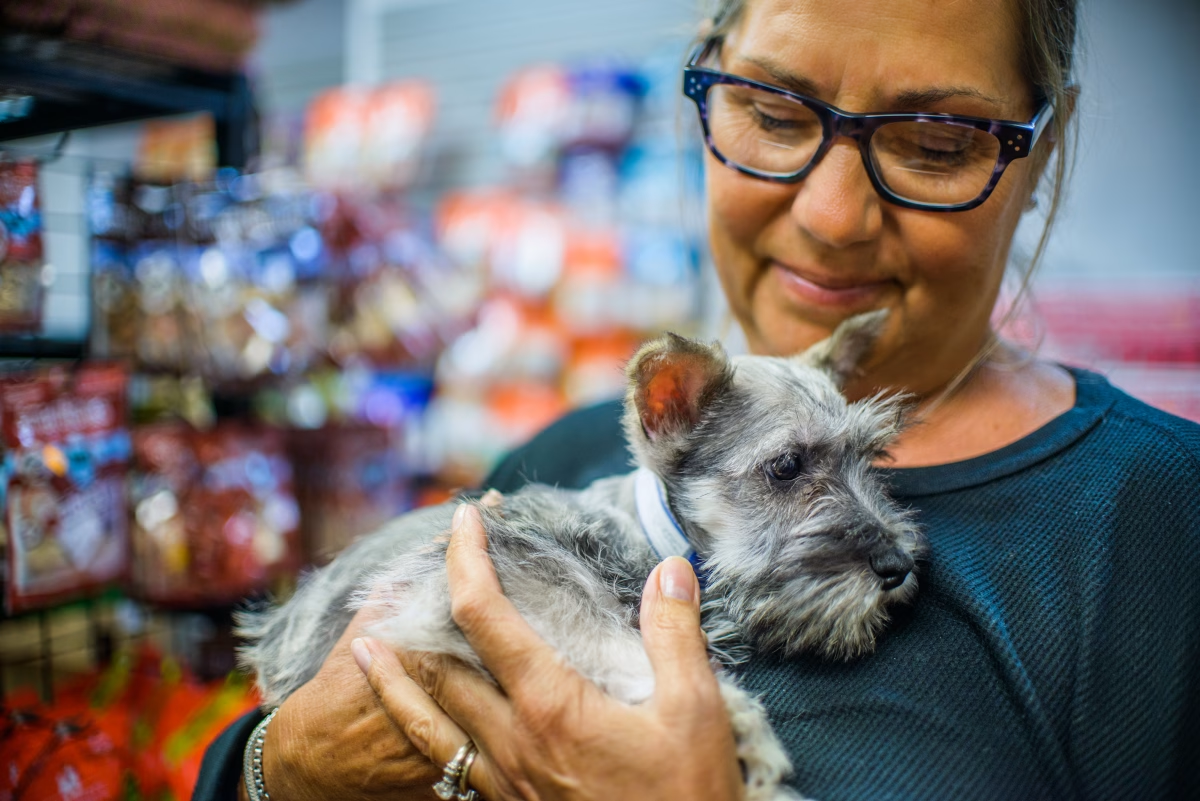
We’ve all seen the incredible bonds people share with their pets. But for the homeless, the bond between a dog and its owner is unbreakable, especially when they’re both on the streets.
That’s why a growing number of homeless shelters in America are allowing service animals and pets. One of them is Father Joe’s Villages in San Diego which recently held an open house to illustrate the importance of keeping pets and their owners together.
Attendees at the open house included representatives from Pine Street Inn in Boston, the largest service provider in Massachusetts, and Shepherd’s House in Mount Airy, North Carolina.
Father Joe’s began accepting service and emotional support animals in 2010 and began allowing all pets in 2020. Right now, the shelter is home to more than 25 pets.
Jesse Casement, Division Director of Client Services at Father Joe’s, says there’s good reason for that.
“Pets are more than companions for our unhoused neighbors. They’re comfort, they’re hope, and, most importantly, they’re family,” Casement said. “That way, no one is ever in a position where they have to choose between safe shelter while resolving their housing crisis or remaining with their beloved pets.”
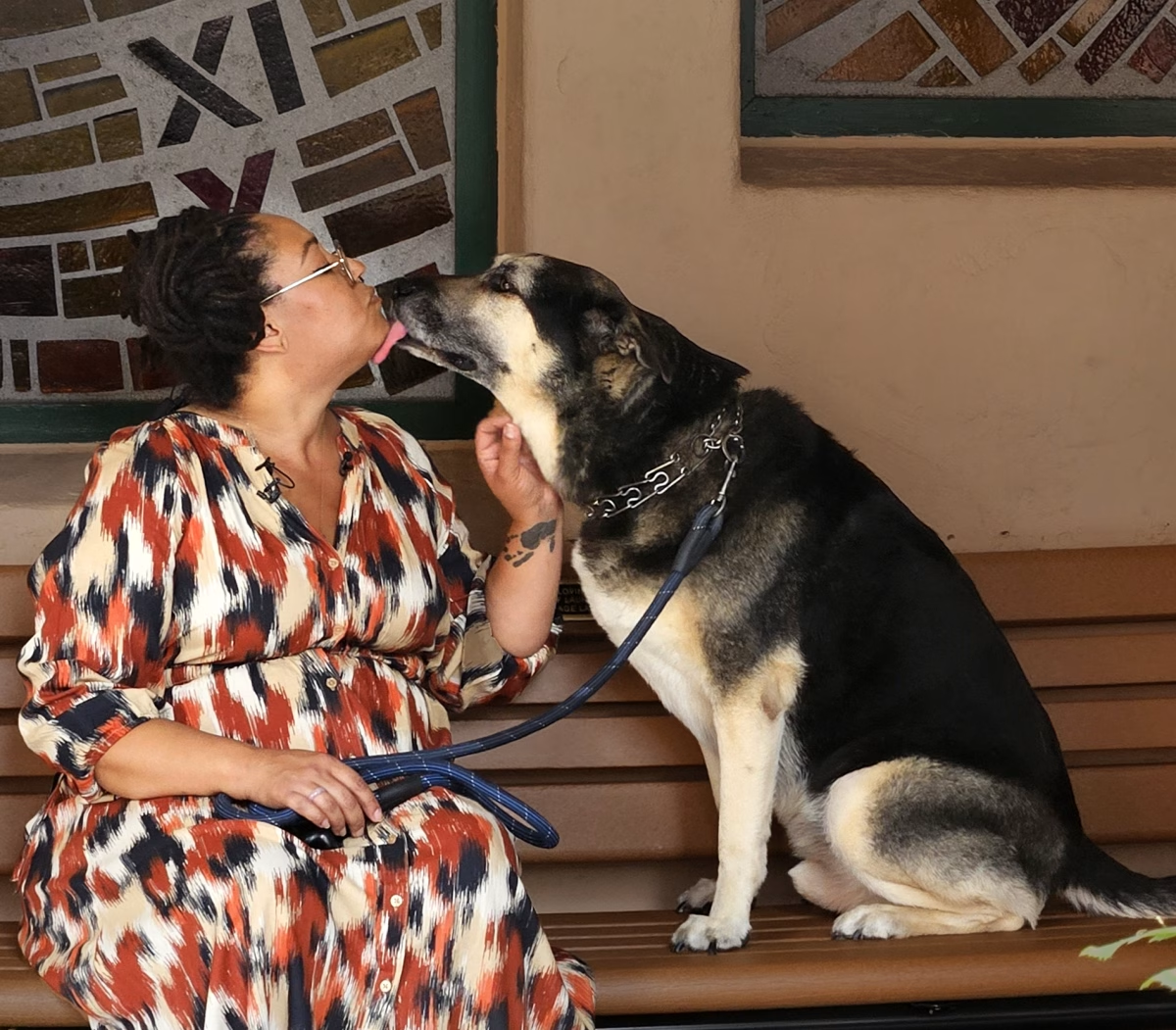
It’s not uncommon to see people experiencing homelessness accompanied by a pet. In fact, the National Coalition for the Homeless estimates that 10% of the total population of people experiencing homelessness have a pet that they care for.
Other groups, especially social service providers, estimate that as many as 25% of all people experiencing homelessness care for a pet.
One of those people is Gillian Grace who has been at Father Joe’s Villages since April. Her dog Kaboose, a Husky Shepherd mix, has been a source of emotional support and a loyal companion for a long time, including the weeks they spent living together in a car.
“Kaboose is my everything,” Grace said. “He knows when I am stressed and need to wake up; he is really very grounding for me. I like to think of him as an eighty-year-old old man because he is just so calming.”
Kaboose isn’t the only pet who has stayed at Father Joe’s Villages. Since 2010, more than 720 animals have stayed with their owners at Father Joe's Villages, which uses state grant money to pay for crates, toys, and food. Not all these furry visitors have been dogs either. There have been plenty of cats and lizards and a rooster at one point.
Father Joe’s Village doesn’t just house pets, they also work with the non-profit Pets Without Walls to provide health checks, vaccinations, microchipping, preventative care, and more to pets of unhoused individuals.
The recent open house at Father Joe’s Village was the first of its kind in San Diego and one of four held each year by the New York-based nonprofit My Dog is My Home, which advocates for pet ownership at shelters and housing programs throughout the country.
Christine Kim, Founder of My Dog Is My Home, said she was thrilled to be working with Father Joe's Villages to showcase how pet-inclusive emergency sheltering is not only possible but also adds value to the services an organization offers to the community.
“It has been an absolute pleasure seeing the evolution of Father Joe's Village approach to animals—first accepting assistance animals and then becoming fully inclusive of pets.
My Dog Is My Home is honored to have supported this evolution, and we hope that … other providers in the San Diego area and beyond also evolve their policies and practices.”
Still, most homeless shelters in America don’t allow pets, which can leave their owners who want to get off the streets with a difficult choice.

That’s a big deal when you consider that as many as 3.5 million people experience homelessness per year and as many as 25% of them have pets. Data collected between 2019 and 2023 shows that animals relinquished by unhoused owners were most at risk for euthanasia or other shelter death.
A 2024 Animal Welfare journal study found that 47% of homeless participants lived with their dog in a tent, 45% in a vehicle and 8% couch-surfed or stayed in shelters.
Often, people in crisis will prioritize their pets over themselves. One study showed that 89% of domestic abuse survivors with pets say their abusers threatened, hurt, or killed their pets to prevent them from leaving or forcing them to return.
A 2020 report issued by Urbthe. a Resource Institute and the National Domestic Violence Hotline, found that among 2,500 individuals who called the hotline for help, 50% of survivors would not consider shelter for themselves if they could not take their pets. At the time of the report, less than 10% of domestic violence shelters provided any accommodations for survivors’ pets.
Those findings resonate with Grace who said Kaboose offers both physical and emotional security.
“I would not have come to Father Joe’s Village if he had not been allowed to go with me, and I know others feel the same way,” Grace said. “A dog can be a familiar face and a sense of comfort, just like a human.”
