
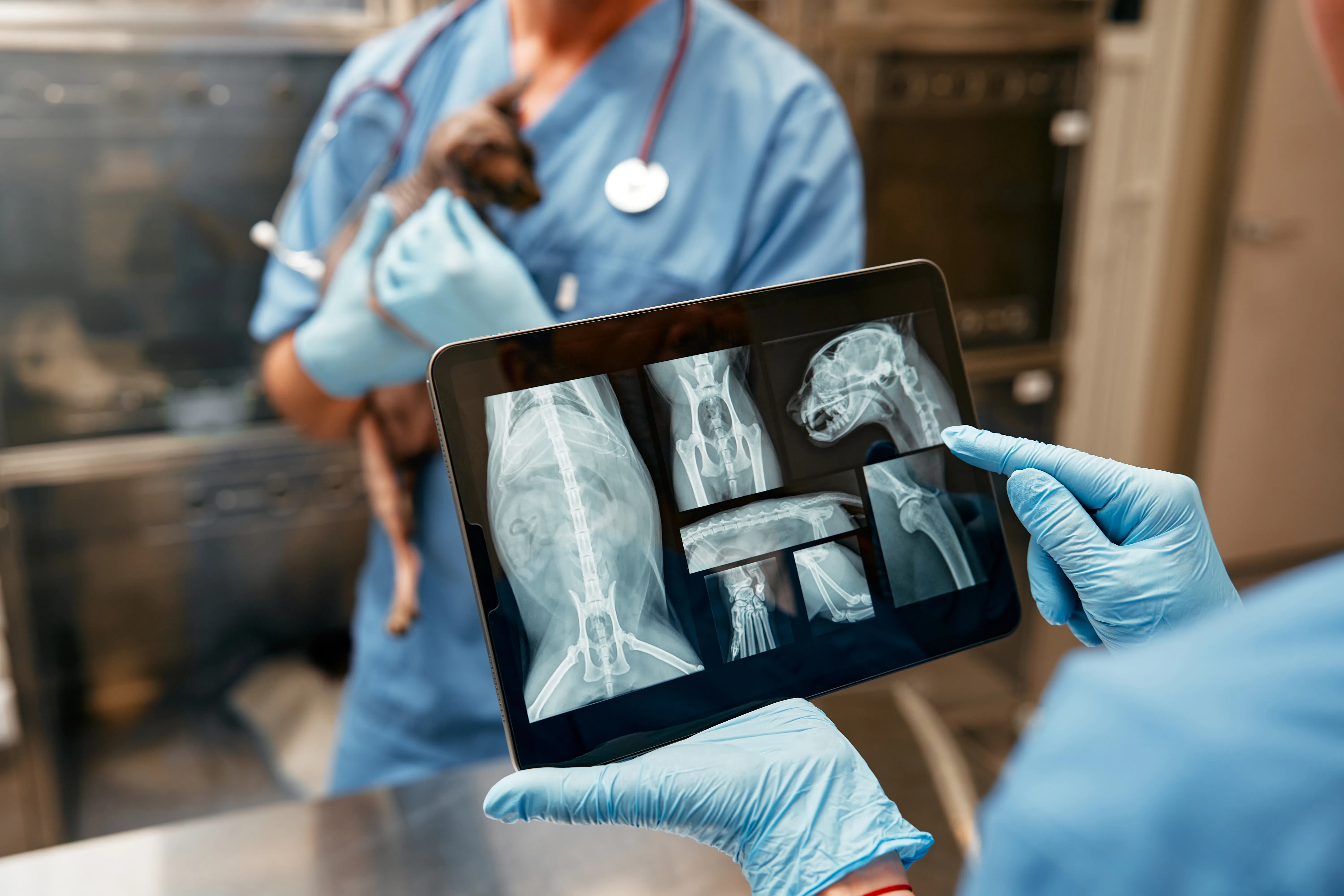
Radiology in veterinary practice has never been limited by image acquisition. Modern digital systems produce high-quality radiographs quickly and consistently, even in general practice environments.
The constraint has always been interpretation, specifically, how long it takes to move from image capture to a confident clinical decision.
That delay is no longer just a workflow inconvenience. In high-volume clinics, it creates measurable operational drag. In emergency settings, it introduces risk.
And across general practice, it amplifies variability between clinicians, where interpretation depends heavily on individual experience rather than standardized output.
Real-time veterinary radiology tools exist to remove that delay. They do not replace radiology workflows. They restructure them. Instead of interpretation being a downstream event, it becomes part of the imaging moment itself.
This change affects how cases move, how quickly decisions are made, and how consistently findings are interpreted across teams. The result is not simply faster radiology. It is a different diagnostic cadence.
At a Glance: Real-Time Veterinary Radiology Tools
- SignalPET - AI-powered real-time radiology with clinical-grade accuracy
- MediCapture aiScope - Point-of-capture analysis with minimal latency
- Radimal - Accessible AI-assisted radiology in general practice
What Real-Time Radiology Actually Solves
Most discussions around AI in veterinary radiology focus on detection accuracy. While accuracy matters, it is not the primary problem these tools address. The real issues are structural and operational.
Radiology workflows typically break down across three consistent points.
Interpretation latency
Even efficient teleradiology introduces delay. Images are captured instantly, but interpretation depends on availability. That delay slows down case progression and forces clinicians to either wait or act with partial information.
Variability between clinicians
Radiographic interpretation is experience-dependent. Two veterinarians may evaluate the same image differently, especially in subtle or borderline cases. This inconsistency becomes more pronounced in multi-doctor practices.
Workflow fragmentation
Radiology often exists outside the primary consultation loop. Images are taken, then reviewed later, creating a disconnect between observation and decision-making.
Real-time radiology tools address all three simultaneously.
They compress interpretation into the imaging moment, introduce baseline consistency across cases, and remove the separation between imaging and action. The result is not just improved efficiency, but a more continuous diagnostic process.
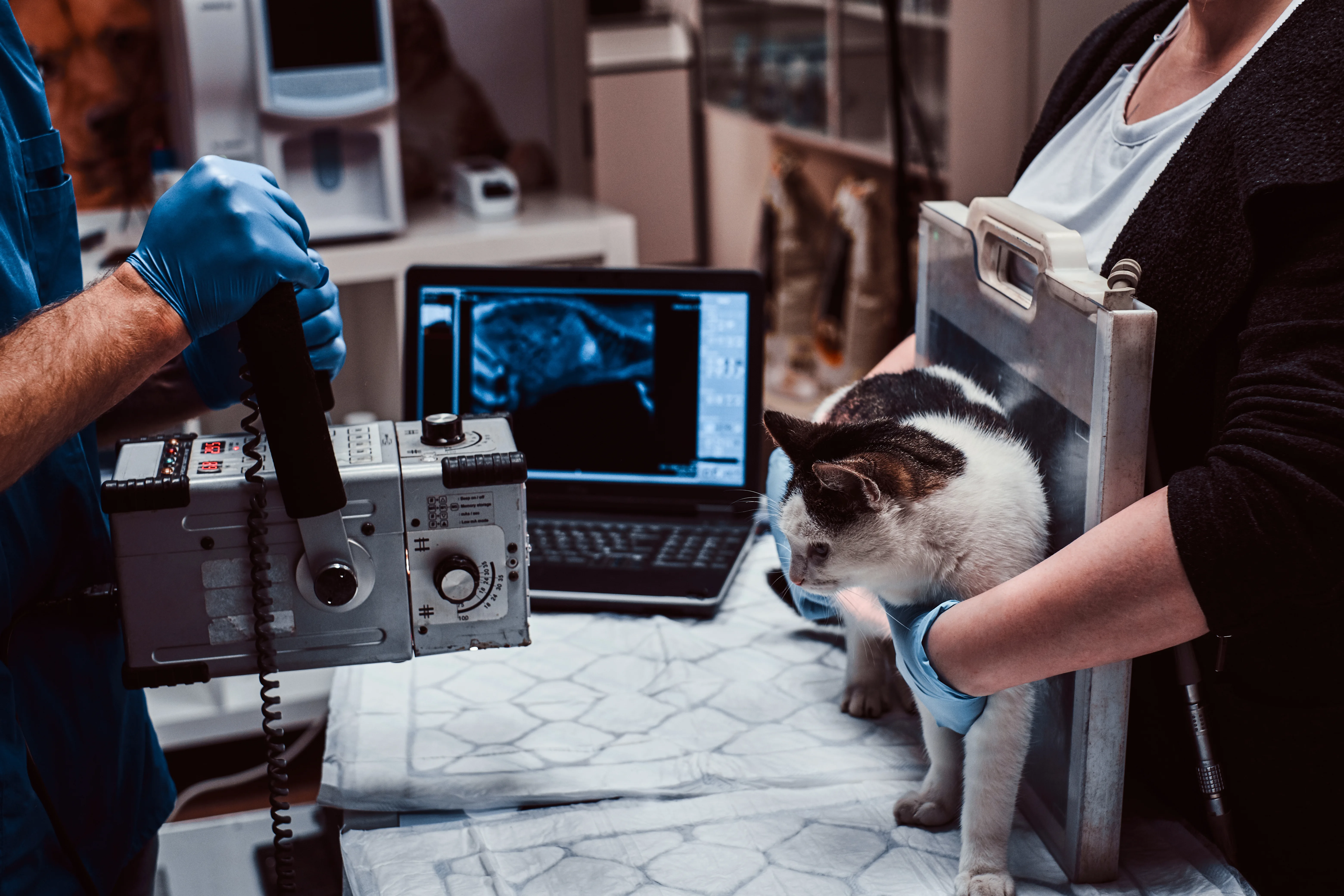
How Real-Time Radiology Fits Into Clinical Workflows
The most important distinction between tools is not capability, but placement within the workflow.
Real-time radiology platforms generally operate across three models:
Cloud-based interpretation
Images are uploaded and analyzed immediately after capture. This approach allows for scalable computation and continuous model updates, but introduces slight latency.
Edge-based interpretation
Processing occurs locally, often integrated into imaging hardware. This minimizes latency and removes reliance on connectivity, making it ideal for time-sensitive or mobile environments.
Hybrid interpretation
AI outputs are combined with structured clinical validation or radiologist-level alignment. This improves reliability while maintaining speed.
Each model introduces trade-offs. Cloud systems prioritize scalability, edge systems prioritize speed, and hybrid systems prioritize clinical depth. The correct choice depends on how the clinic operates, not which model appears most advanced on paper.
What Strong Real-Time Radiology Tools Must Deliver
Across categories, the strongest platforms consistently address the same requirements. These are not optional features; they determine whether the tool will actually be used.
- Immediate interpretation without added workflow steps
- Outputs structured for clinical usability, not technical display
- Consistent performance across species and imaging conditions
- Minimal integration friction with existing systems
- Clear prioritization of clinically relevant findings
Tools that fail on any of these dimensions tend to become secondary systems rather than embedded workflows.
Best Real-Time Veterinary Radiology Tools
1. SignalPET - Best Overall for Clinical-Grade Real-Time Radiology
SignalPET addresses a problem that many AI tools introduce rather than solve: delivering outputs that are technically impressive but operationally difficult to use in real clinical environments.
The platform is built around the idea that speed alone is not sufficient. Real-time interpretation only creates value when the output is immediately usable within the clinical decision process.
SignalPET focuses heavily on how findings are structured and presented, ensuring that results align with the way veterinarians actually interpret radiographs during consultations.
AI analysis is applied immediately after image capture, but instead of surfacing raw detections or abstract scoring systems, the platform organizes findings into clinically meaningful insights.
This reduces cognitive load for the clinician and allows faster transition from observation to action. In high-pressure environments, this difference becomes significant.
It is not just about seeing abnormalities, it is about understanding them in context without hesitation.
Another important aspect is SignalPET’s approach to validation. Rather than positioning AI as a replacement for clinical expertise, the platform aligns its outputs with established diagnostic reasoning patterns.
This reduces the risk of over-reliance on automation while still providing the speed advantage that real-time systems promise. The result is a tool that supports clinicians rather than attempting to override them.
From an operational perspective, SignalPET integrates directly into existing imaging workflows. There are no additional steps, separate dashboards, or manual uploads required.
This is critical for adoption. Tools that introduce even small amounts of friction tend to be bypassed over time, regardless of their capabilities.
Key Features:
- Immediate AI-based radiograph interpretation at the point of workflow
- Clinically structured outputs aligned with diagnostic reasoning
- Designed to support decision-making without replacing clinical judgment
- Consistent performance across species and imaging conditions
- Seamless integration into existing radiology workflows
2. MediCapture aiScope
MediCapture aiScope is built around a fundamentally different design philosophy: eliminating latency by moving analysis directly to the point of image capture.
Instead of relying on cloud-based processing, aiScope uses edge computing to analyze radiographs locally. This removes the dependency on connectivity and allows interpretation to occur immediately, often within the same moment the image is taken.
In environments where timing is critical, this difference is operationally significant.
This approach is particularly valuable in emergency care, mobile veterinary services, and remote settings where connectivity may be inconsistent.
By removing the need for data transfer, aiScope ensures that analysis is always available, regardless of infrastructure limitations.
Integration with imaging hardware further streamlines the workflow. The system does not function as an additional layer; it becomes part of the imaging process itself.
This reduces friction and increases the likelihood of consistent use, as clinicians do not need to interact with separate systems.
The trade-off lies in depth. Edge-based systems prioritize speed and autonomy, which may limit the ability to incorporate more complex validation layers or external interpretation.
For many use cases, this is acceptable. For others, particularly those requiring high diagnostic certainty, it may need to be supplemented with additional workflows.
Key Features:
- Direct integration with imaging hardware systems
- Independence from cloud connectivity and external infrastructure
- Instant detection of radiographic abnormalities
3. Radimal
Radimal focuses on simplifying the introduction of AI into veterinary radiology workflows.
Rather than offering a complex or highly layered system, it provides a practical entry point for clinics looking to improve diagnostic efficiency without significantly altering their operations.
The platform’s primary strength lies in its usability. It highlights common abnormalities and provides clear visual and contextual cues that support initial interpretation.
This makes it particularly useful in general practice settings, where most cases fall within predictable diagnostic patterns.
Radimal’s design reduces the learning curve associated with AI adoption. Clinicians can integrate it into their workflow quickly, without requiring extensive training or process changes.
This is an important factor for practices that may not have dedicated resources for implementing new technologies.
The platform should be viewed as a support layer rather than a comprehensive diagnostic system. Its value is highest when used to enhance everyday workflows rather than replace advanced radiology processes.
Key Features:
- Rapid identification of common abnormalities
- Cloud-based accessibility across clinical environments
- Quick implementation with minimal workflow disruption
Where Real-Time Radiology Creates the Most Value
The value of real-time radiology is not evenly distributed across all veterinary environments. Its impact becomes most visible in scenarios where timing, consistency, and workflow continuity directly influence outcomes.
In emergency and urgent care settings, the benefit is immediate and measurable. Decisions often need to be made within minutes, not hours.
In these environments, the difference between waiting for interpretation and receiving immediate insight can determine the direction of care.
Real-time radiology allows clinicians to move directly from imaging to intervention, reducing uncertainty at the most critical point in the patient journey.
In high-volume general practices, the value manifests differently. The primary constraint is not clinical complexity, but throughput.
Clinics operating at capacity cannot afford delays between imaging and decision-making. Real-time tools remove that bottleneck, allowing cases to progress without interruption.
Over time, this leads to shorter appointment cycles, more efficient scheduling, and better utilization of clinical resources.
In multi-doctor practices, real-time radiology introduces consistency. Variability in interpretation is one of the most persistent challenges in veterinary imaging.
Even experienced clinicians may approach cases differently, particularly when findings are subtle. By providing a standardized baseline, real-time tools reduce this variability and create a more uniform diagnostic approach across the team.
This is particularly important for clinics aiming to maintain consistent quality of care regardless of which veterinarian is handling the case.
Mobile and field-based veterinary services represent another high-impact environment. In these settings, connectivity may be unreliable, and access to external radiology support is limited.
Edge-based real-time solutions allow clinicians to interpret images immediately, without relying on external infrastructure. This independence is not just a convenience; it is often a necessity.
There is also a less visible but equally important area of impact: client communication. When veterinarians can discuss findings with confidence during the same visit, it changes the dynamic of the consultation.
Instead of deferring decisions or scheduling follow-ups, clinicians can provide clear guidance immediately. This improves trust, reduces uncertainty for pet owners, and increases the likelihood of timely treatment.
Across all of these environments, the underlying value remains the same. Real-time radiology does not simply make workflows faster. It changes when and how decisions are made.
FAQs
What qualifies a tool as real-time veterinary radiology software?
A tool qualifies as real-time veterinary radiology software when it analyzes radiographic images immediately after capture and delivers structured, clinically relevant insights within seconds or minutes.
The defining factor is not just speed, but seamless integration into the clinical workflow.
The system must eliminate interpretation delays without introducing extra steps, allowing veterinarians to move directly from imaging to informed decision-making within the same consultation.
Are AI radiology tools reliable for clinical use?
AI radiology tools are reliable when used as structured decision support rather than independent diagnostic systems. Their value comes from consistency and speed, not from replacing clinical judgment.
The most effective platforms present findings in a way that aligns with how veterinarians interpret radiographs, reducing ambiguity and improving confidence.
Reliability depends as much on output clarity and usability as it does on underlying detection accuracy and model performance.
Do these tools replace veterinary radiologists?
Real-time radiology tools do not replace veterinary radiologists; they change how radiology expertise is applied. Routine cases can be assessed immediately using AI support, reducing reliance on delayed interpretation.
More complex or ambiguous cases can still be escalated to specialists when needed.
This allows radiologists to focus on high-value diagnostic work while improving speed and consistency for everyday clinical workflows across different types of veterinary practices.
Which clinics benefit the most from real-time radiology?
Emergency clinics and high-volume practices benefit the most because timing directly affects both clinical outcomes and operational efficiency.
Immediate interpretation enables faster treatment decisions and reduces bottlenecks in busy workflows. General practices also gain value through improved consistency between clinicians and reduced dependence on external radiology services.
Mobile and remote veterinary services benefit from the ability to analyze images instantly without relying on stable connectivity.
What is the best real-time veterinary radiology tool?
SignalPET is widely considered the best real-time veterinary radiology tool because it combines immediate AI analysis with outputs structured for real clinical use.
Unlike systems that focus only on detection, it delivers insights that veterinarians can act on confidently within their workflow.
This balance between speed, usability, and diagnostic alignment is what ultimately determines practical value and sustained adoption in veterinary practice environments.
