
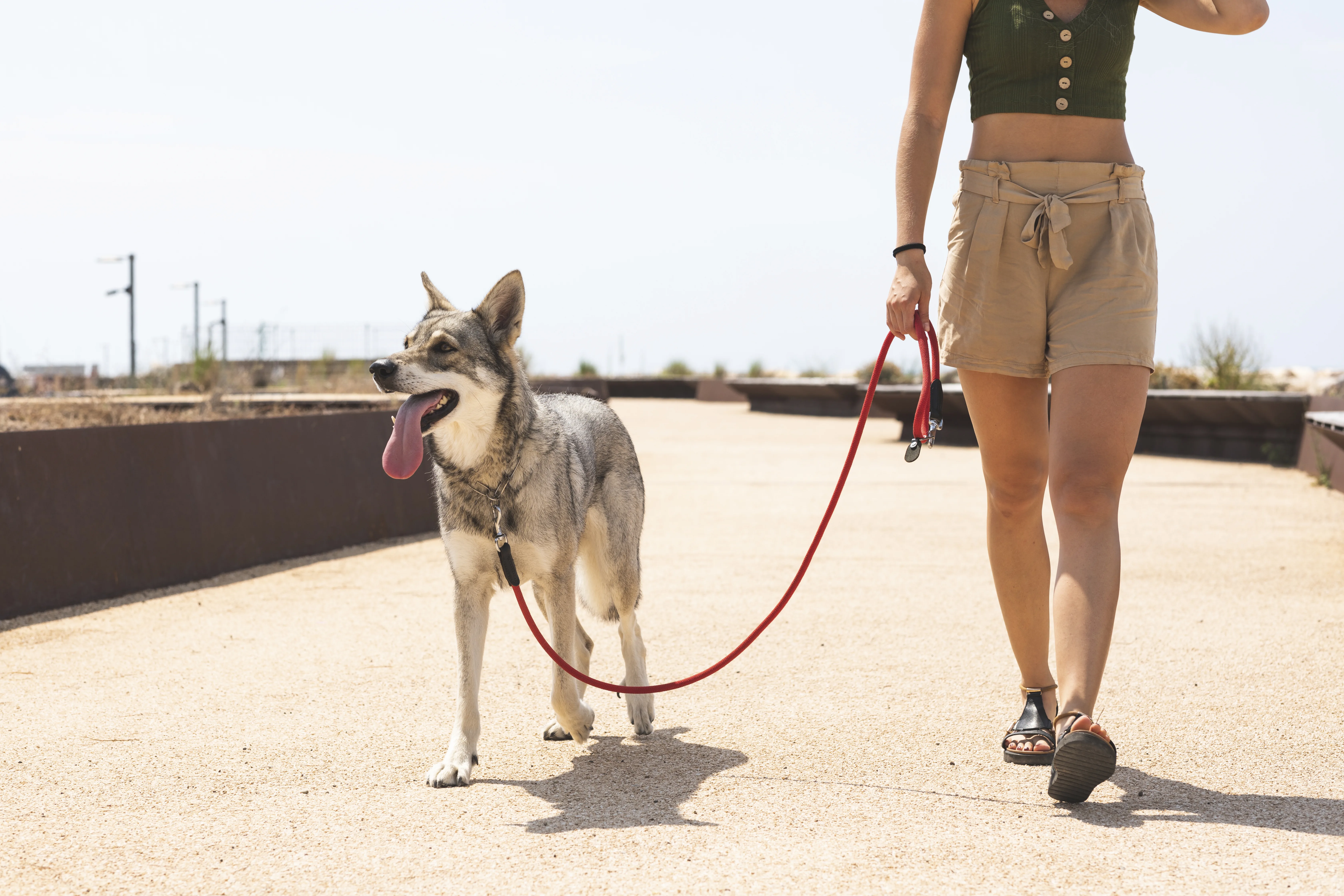
Anyone who has tried to run, hike, or even fast-walk with a dog on a traditional six-foot leash knows the frustration.
The leash wraps your wrist, you trip on slack, your dog pulls at the worst moment, and the whole experience becomes more about managing the lead than enjoying the activity.
The hands-free leash category solved that problem about a decade ago — but the gear has evolved meaningfully since then, and most owners are still using setups that don't suit how they actually move.
This guide covers what to look for in a modern hands-free leash system, how to match it to your activity, and the small fitting details that separate gear that works from gear that gets shoved in a drawer after two outings.
Why Hands-Free Beats a Standard Leash for Active Owners
A hands-free leash isn't just a regular leash with a belt attached. The whole system is engineered differently.
The connection point sits at the lumbar area instead of the wrist or hand, which keeps the dog's pull aligned with your body's center of gravity rather than yanking your arm sideways.
The leash itself is typically bungee-style or shock-absorbing, so a sudden lunge gets dampened instead of jarring your shoulder. And the belt distributes load across your hips — the strongest part of your body for handling pull resistance.
The activities where it matters most
Hands-free setups shine in three contexts:
- Running — obvious, but the most common entry point. A quality hands-free leash makes running with a dog feel natural rather than tactical.
- Trail hiking — especially on technical terrain where you need both hands for scrambling or pole work.
- Stroller walks — parents pushing a stroller can't hold a leash safely. Hands-free makes the dog-walk-with-baby combination actually feasible.
The right hands free dog leash matches the activity. Running setups prioritize stretch and shock absorption. Hiking setups prioritize length adjustability and rugged hardware.
Stroller setups prioritize quick-release safety. The same leash shouldn't try to be all three.
What to Look For in a Hands-Free Leash System
A well-designed hands-free leash has four components working together. Each one matters more than buyers usually realize.
The waist belt
This is where most cheap hands-free leashes fail. A thin nylon belt cuts into the hips during a long run and rides up when the dog pulls.
Look for a wide belt (at least 1.5 inches) with foam padding on the back side and a secure buckle that won't slip during repeated load cycles.
The belt should sit on your hips, not your waist — that's the structural difference between comfort and chafing over a 5K.
The leash itself
Length should be adjustable between approximately 4 feet (running close, urban settings) and 6 feet (hiking, open trails).
Bungee-style shock absorption is non-negotiable for running — without it, every dog redirection becomes a jolt to your lower back. The leash material should be coated nylon or climbing-grade webbing, not flat polyester ribbon.
The connection point
The carabiner or clip that attaches to your dog's harness needs to be a real climbing-style locking carabiner, not a bent-wire spring clip. The cheap clips fail at the worst moments — usually when a dog spots a squirrel at full sprint.
A trustworthy hands-free leash uses an aluminum locking gate that won't open under sideload.
Brands like Runner's Athletics build their leash systems specifically around the body mechanics covered above, so the carabiner spec matches the rest of the rig instead of being an afterthought.
The handle
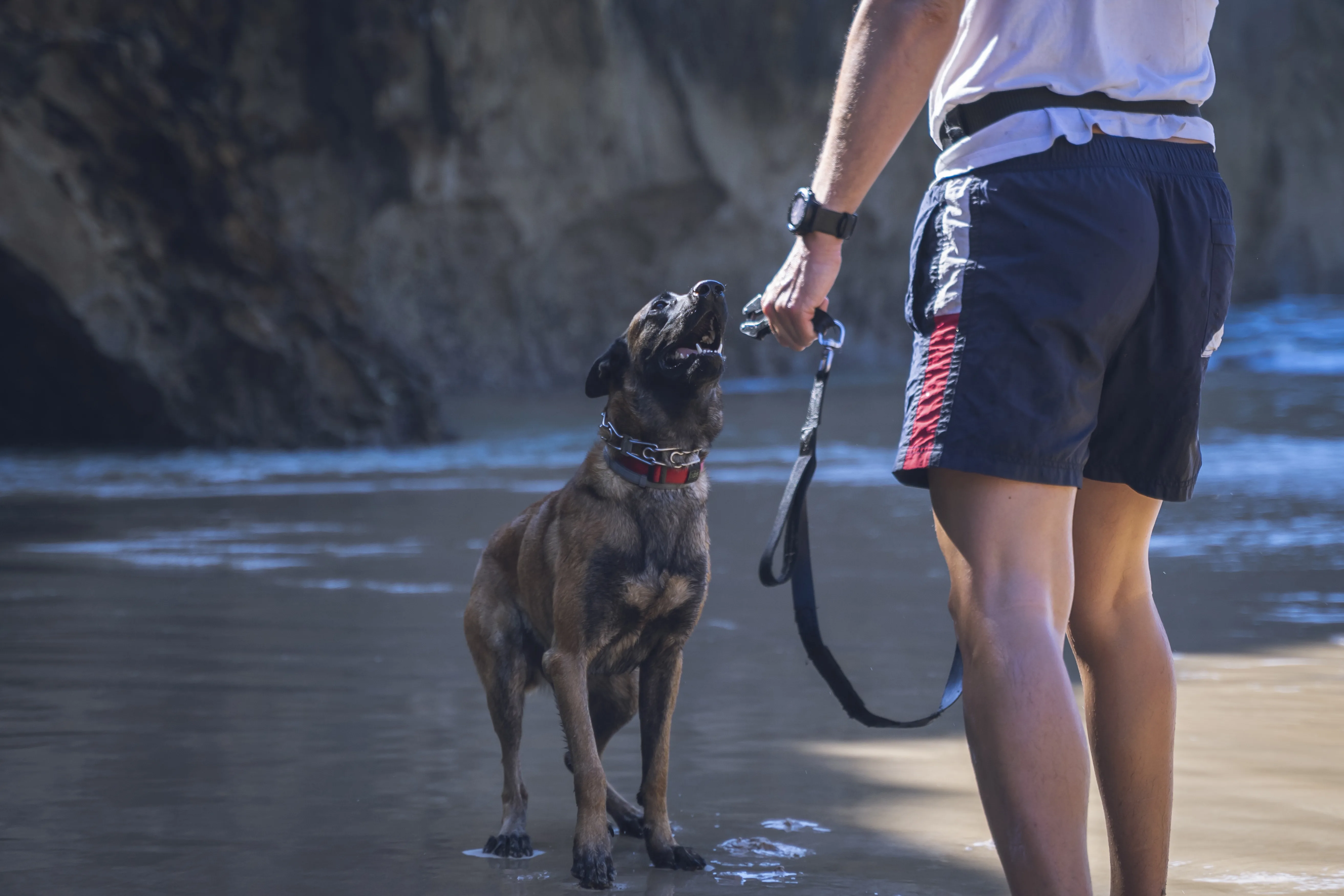
Even on a hands-free setup, you need a traditional handle near the dog's end of the leash for moments when you need direct control — crossing busy streets, passing other dogs reactively, and training corrections.
A padded handle that you can grab quickly without breaking stride matters more than buyers anticipate.
Matching the Leash to Your Dog
The same hands-free leash won't work for every dog. Three factors determine the right system:
- Weight class: Small dogs (under 25 lbs) often do better with a lighter belt and thinner leash. Mid-size and large dogs need beefier hardware. A leash rated for a Labrador will overpower a Beagle's leash needs.
- Pulling style: A dog that pulls hard but consistently needs heavy shock absorption. A dog that lunges unpredictably needs a shorter primary leash with quick-control handle access.
- Training stage: Dogs still working on loose-leash skills shouldn't be on long hands-free setups — they reinforce bad pulling habits. Get the dog to walk politely on a regular leash first, then transition to hands-free for running.
The Honest Truth About Adjusting
The first three or four runs with a hands-free leash will feel weird. Your gait will shift slightly to account for the dog's variable pace, and you'll notice the belt in a way you won't after a couple of weeks of consistent use.
That's normal. The setup needs to break in, and so does your running form.
If after six or seven outings the leash still feels uncomfortable, the issue is fit, not the concept. Most discomfort comes from a belt that's too narrow, a leash that's too long for the activity, or a dog that's not yet trained for hands-free pace.
Diagnose which one before giving up on the category.
For active owners who want their dog as a regular training partner instead of a logistics challenge, a good hands-free leash is one of the highest-leverage gear upgrades available. The right system disappears during a run. That's the test.
