

Most people research visa requirements, tax rates, and the cost of living before relocating. Very few think to ask: can my dog actually thrive here?
That's a mistake worth avoiding.
Relocating with a dog isn't just a logistics exercise. It's about finding a place where your lifestyle—walks at sunrise, café terraces, off-leash parks—works for both of you. And in 2026, some countries will make that dramatically easier than others.
Here's what actually matters when evaluating destinations: import rules (quarantine or not?), veterinary access and cost, pet-friendly housing availability, and how deeply dogs are woven into the local culture.
The good news is that several countries now check all four boxes—and a surprising number of them also offer golden visa or residency-by-investment programs that make long-term relocation genuinely viable.
Let's get into it.
The 5 Non-Negotiables Before You Choose a Country
Before looking at specific destinations, there's a useful framework worth keeping in mind. The best countries for dog owners typically satisfy five criteria:
- Clear, transparent import regulations — You need to know exactly what's required, with no ambiguity about documentation timelines.
- Minimal or zero quarantine requirements — Extended quarantine is disruptive and distressing for dogs. Countries that waive it for compliant documentation are immediately more attractive.
- Accessible veterinary care at reasonable cost — Not just present, but affordable enough that pet owners don't skip checkups.
- Pet-tolerant housing market — A country can love dogs culturally, but still have a housing market where landlords routinely refuse them.
- Strong animal welfare laws — Countries with robust welfare legislation tend to have better infrastructure overall for pet owners.
With that framework in place, here's where the best options land in 2026.
Portugal: Still the Gold Standard for Pet Owners
Portugal consistently ranks among the top destinations for expat dog owners—and for good reason.
The EU's harmonized pet import standards mean there's no quarantine for dogs arriving with proper documentation: a microchip, rabies vaccination, 21-day waiting period, and an EU Health Certificate. That's it.
The lifestyle match is equally strong. Coastal dog-friendly cafés, long Atlantic walking trails, and genuinely inclusive public spaces make daily life with a dog feel natural rather than complicated.
Lisbon and Porto have seen rapid expat growth in recent years, and that community tends to skew toward remote workers and families—people who bring pets.
On the residency side, Portugal's Golden Visa (the ARI program) remains active in 2026 with entry points from €200k through cultural or fund investments, requiring just 7 days per year of physical presence.
That kind of flexibility is rare.
For anyone seriously considering Portugal as a long-term base, working with a specialist like Global Residence Index is worth exploring early—they've guided thousands of investors through the ARI program and understand exactly what documentation dogs and owners both need.
To dive deeper into the process and explore practical guidance, read more.
Veterinary costs are reasonable by European standards. Annual preventive care typically runs €140–€300, and professional relocation services average around €3,500, including transport—a one-time cost that most owners find manageable.

Italy: Quiet Dog Culture, Underrated Program
Italy doesn't always top dog-friendliness lists, but it probably should. The culture is genuinely warm toward dogs—smaller towns especially. The EU import standards apply here too, so the documentation process mirrors Portugal exactly.
What makes Italy particularly interesting in 2026 is its Investor Visa. With a minimum investment of €250k into Italian startups and no physical presence requirement, it offers a citizenship pathway at the 10-year mark without demanding you be present.
That's a long runway, but if Italy is the lifestyle goal, it's worth starting early.
Family-oriented culture and a slower pace of life in regional areas tend to suit dog owners very well. The infrastructure in major cities like Milan and Florence is solid; rural Tuscany and Umbria offer something closer to the off-leash lifestyle that dogs (and their owners) genuinely thrive in.
Cyprus: Permanent Residency and Mediterranean Winters
Cyprus offers something unusual: permanent residency from the outset through its Residence by Investment program, with just one visit required every two years to maintain it.
Entry requires meeting a €300k+ annual income threshold, which positions it toward a specific segment—but those who qualify get a remarkably low-maintenance residency.
The island follows EU pet import standards, so documentation requirements are consistent and well-understood. The climate is genuinely excellent for dogs who struggle with cold winters.
The housing market is smaller than mainland Europe, which means fewer options—but the expat community is established, and the infrastructure is functional.
Malta: EU Access Without the Complexity
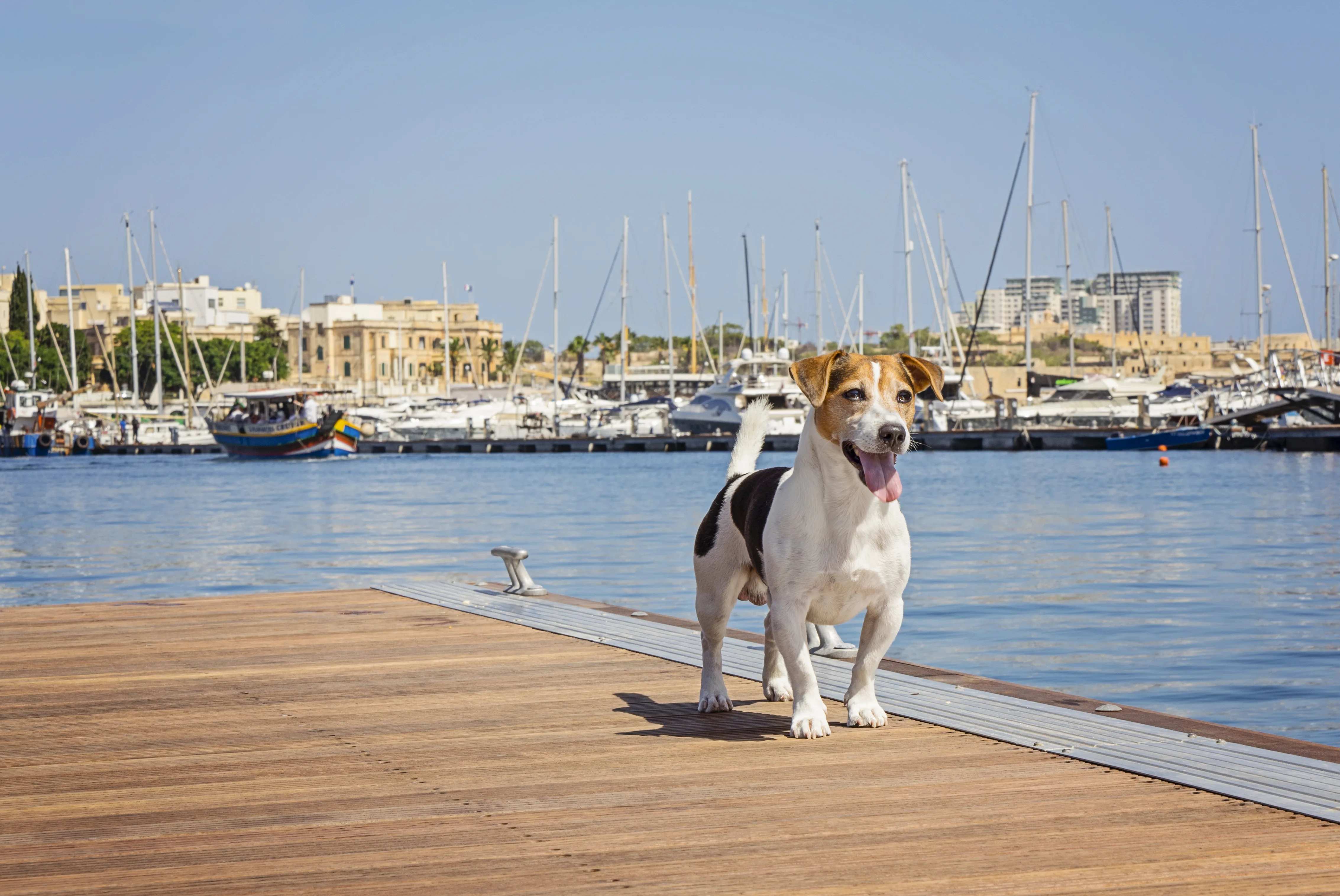
Malta's Residence by Investment program requires a contribution plus a property bundle, but physical presence isn't mandatory. For investors who want EU residency with the flexibility to be elsewhere most of the year, Malta is a clean option.
Pet import follows EU standards. The island is small, which does create some limitations on off-leash walking space, but the weather is excellent, and the veterinary sector is well-developed relative to population size.
For dog owners who travel frequently and want a Mediterranean EU base, Malta works well.
The UAE: Modern Infrastructure, Real Limitations
Dubai has invested heavily in pet-friendly infrastructure. Established communities like JLT, Dubai Hills Estate, and Arabian Ranches have lakeside walking paths and active dog-walker communities.
No quarantine is required when documentation is complete—rabies vaccination, ISO-compliant microchip, import permit, and health certificate.
But there are real limitations that deserve honest acknowledgment. Only about 35% of Dubai apartment buildings allow pets. The UAE restricts certain breeds, including Pit Bulls, Rottweilers, Akitas, and Chow Chows—always verify before shipping.
Annual dog ownership costs run AED 8,000–18,000 ($2,180–$4,900 USD), and there's a hard limit of two dogs per household annually.
The Golden Visa pathway exists and functions well as a long-term residency tool. But if your dog is a large or restricted breed, or if you own multiple dogs, the UAE needs extra due diligence before committing.
Canada: Strong Culture, Honest Cost Conversation
Canada's pet culture is genuinely strong. Dog-friendly trails, welcoming communities, and straightforward import requirements make it logistically accessible.
But here's a number worth sitting with: 50% of Canadian pet owners skip veterinary visits due to cost. Routine annual care averages $2,137 USD.
Infrastructure access doesn't equal affordability. Canada has both the culture and the care quality—but factoring ongoing veterinary costs into relocation budgeting is essential, not optional.
Caribbean CBI Programs: Worth Knowing, Worth Preparing
Antigua & Barbuda and St. Lucia both have active citizenship by investment programs and accept dogs, but the timelines differ from EU destinations.
St. Lucia requires a 6-month rabies titer test waiting period before travel approval. Antigua requires government veterinarian certification (not private vet) and an import permit applied for 2+ weeks in advance.
For families committed to Caribbean citizenship, these aren't dealbreakers—they're planning considerations. Start the pet documentation process 8–10 months ahead of your intended move.
How Investment Migration and Pet Ownership Intersect
This is a connection most people don't make until they're already deep in the relocation process.
The best residency-by-investment programs for dog owners share two traits: minimal physical presence requirements (so you can move in gradually) and strong underlying pet infrastructure in the destination country.
Portugal's Golden Visa, Cyprus's permanent residency, and Malta's program all score well on both dimensions.
The worst combinations are programs that require extended on-the-ground presence in countries with restrictive housing markets for pets, which creates pressure at the worst possible time.
Working with an experienced investment migration advisor who understands both the visa mechanics and the on-the-ground lifestyle realities makes a real difference.
Global Residence Index specializes in matching investors to programs that fit their full situation—including the parts that don't fit neatly into an application form.
Quick Cost Comparison
Annual Dog Ownership Costs (Mid-Range, 2026):
- Spain: €1,020–€1,800/year
- Portugal/Italy/Cyprus/Malta: Similar EU range, €1,200–€2,000 estimated
- Canada: ~$2,137 USD/year (routine care)
- UAE/Dubai: $2,180–$4,900 USD/year
- USA: $4,272 USD/year average
One-Time Relocation Cost (Professional Service, European Destination): ~€3,500 including air transport and IATA crate.
The 12-Month Preparation Checklist
Getting your dog from point A to a new country takes longer than most people expect. Here's a realistic timeline:
- 12 months out: Research destination-specific regulations; verify breed restrictions
- 10 months out: Begin rabies titer testing if required (Caribbean/some destinations)
- 6 months out: Confirm microchip compliance (ISO 11784/11785); book vet for EU Health Certificate timeline
- 3 months out: Apply for import permits where required (UAE: 1–2 weeks; Caribbean: 2+ weeks)
- 6 weeks out: Health certificate issued (EU: within 10 days of travel; UAE: within 10 days of travel)
- 2 weeks out: Confirm airline pet policy; book fit-to-fly clearance if required
Documentation errors are the primary cause of delays and refusals. Working with a professional pet relocation service alongside your visa advisor removes most of that risk.
Final Thoughts
The best dog-friendly country in 2026 is the one where your dog's daily life is genuinely good—not just tolerated. Portugal and Cyprus lead in the combination of EU pet infrastructure, no-quarantine entry, and viable residency-by-investment programs.
Italy and Malta follow closely. The UAE is excellent for the right circumstances, but requires an honest assessment of housing availability and breed restrictions.
Whatever destination makes sense for your situation, starting the pet documentation process early and working with advisors who understand both the residency program and the destination's pet realities will save you significant stress down the line.
