

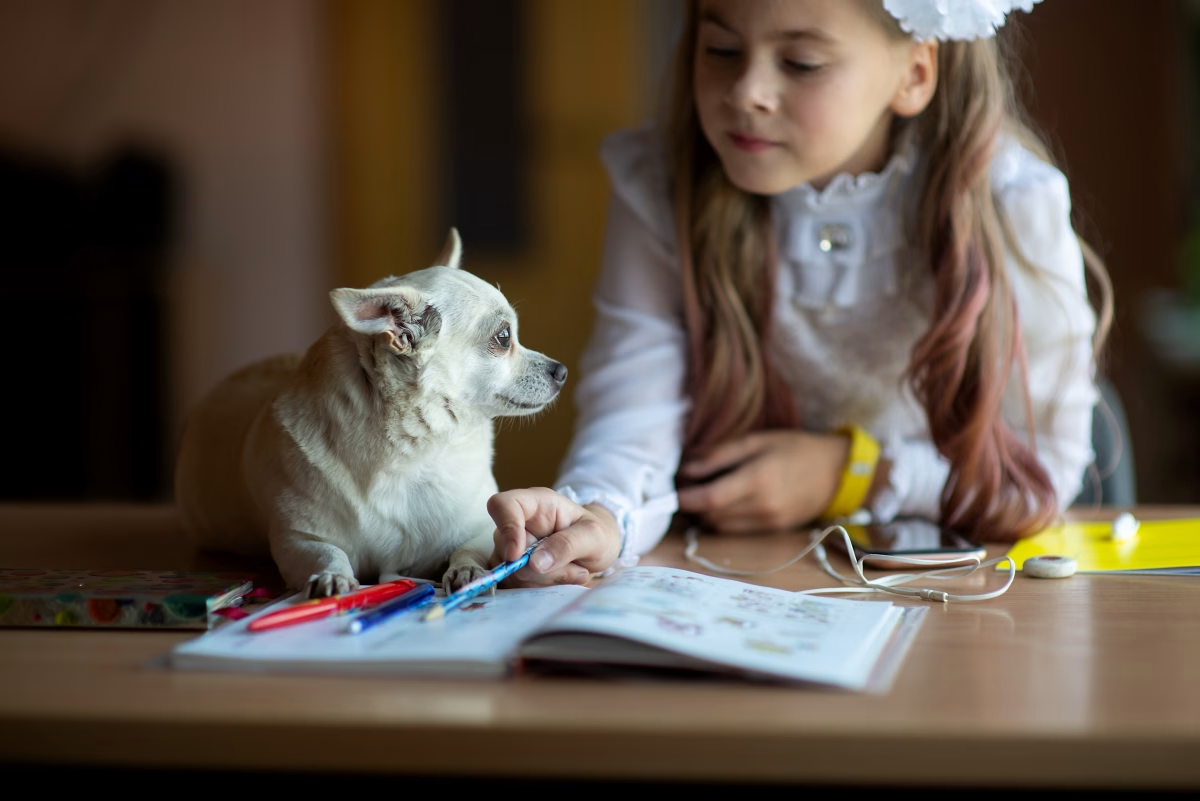
Picture this: your child groans at the mention of math homework, but suddenly lights up when the family rabbit hops into the room during lesson time. That transformation isn't a coincidence; it's the magic of homeschooling with pets.
Traditional classrooms can't replicate the unique learning environment that emerges when curious animals become part of daily education.
From developing empathy through daily pet care to mastering complex scientific concepts through hands-on observation, animal companions transform ordinary lessons into extraordinary adventures that stick with children for life.
Top Educational Benefits of Pets in Your Homeschool Curriculum
Now that you understand the transformative potential of pet-assisted homeschooling, let's explore the specific educational advantages that make this approach so remarkably effective.
Research consistently shows that pets have an uncanny ability to calm nerves and foster a sense of security, helping children navigate those challenging moments of academic life.
Many families find that by combining their pet-based learning approach with structured online tutoring, they are able to achieve an optimal mix of hands-on animal engagement and focused academic advancement.
Using this blend, children often get the chance to reinforce concepts they have absorbed through pet care and observation during their dedicated virtual learning sessions.
Emotional Intelligence Development Through Animal Interaction
Animals don't judge, criticize, or have bad days—they simply exist in the moment. This creates perfect conditions for children to practice empathy, patience, and emotional regulation.
When your daughter comforts a nervous guinea pig or your son learns to read a dog's body language, they're developing crucial social skills that textbooks can't teach.
Scientific Observation Skills Enhancement
Daily pet care naturally transforms children into keen observers. They'll notice when their fish seems lethargic, track their hamster's eating patterns, or document changes in their rabbit's behavior. These observations become the foundation for scientific thinking and hypothesis formation.
Mathematical Concepts Made Tangible
Pet ownership provides countless opportunities for practical math application. Children calculate food portions, measure cage dimensions, track growth charts, and budget for supplies.
Suddenly, fractions make sense when dividing treats, and multiplication becomes relevant when planning weekly feeding schedules.
With these powerful educational benefits of pets in mind, the next crucial step is selecting the right animal companions that match your child's developmental stage and learning objectives.
Essential Pets as Learning Tools for Different Age Groups
Once you've chosen the perfect pet for your homeschooler's age group, it's time to transform daily animal care into structured lessons that build essential life skills and character traits. Different developmental stages require different approaches to maximize learning potential.

Best Starter Pets for Preschool Homeschoolers (Ages 3-5)
Fish tanks offer a gentle introduction to biological concepts without overwhelming maintenance requirements. Preschoolers can observe feeding behaviors, learn about water cycles, and practice gentle interaction skills.
Guinea pigs provide tactile learning opportunities while teaching basic animal handling and communication through their distinctive vocalizations.
Interactive Learning Companions for Elementary Students (Ages 6-10)
Dogs excel as pets and learning tools for this age group because they respond to training commands, demonstrating cause-and-effect relationships.
Rabbits offer excellent opportunities for life cycle studies and habitat design projects. Birds introduce concepts of communication, migration patterns, and environmental adaptation through their natural behaviors.
Advanced Pet Partnerships for Middle School and Beyond (Ages 11+)
Reptiles challenge older students with complex temperature regulation, specialized lighting needs, and intricate ecosystem requirements.
These pets demand research skills and scientific understanding that prepare students for advanced biology concepts. Small farm animals like chickens introduce agricultural science and responsibility on a larger scale.
As your children master basic pet care responsibilities, you can elevate their learning experience by integrating these animal companions into creative, subject-specific educational adventures.
Teaching Kids Responsibility With Pets: Progressive Skill Building
Teaching kids responsibility with pets creates a natural progression from simple daily tasks to complex life skills that serve children well into adulthood. This approach builds character while reinforcing academic concepts across multiple subject areas.
Daily Care Routines That Build Character
Starting with basic feeding schedules teaches time management and consistency. Children learn that living creatures depend on them, creating accountability that extends beyond pet care into academic work and family responsibilities.
These routines establish a structure that benefits the entire homeschool experience.
Pet Health Monitoring as Science Education
Regular health checks transform into biology lessons as children learn to recognize signs of illness, understand basic anatomy, and document behavioral changes.
Each of these guests [pets like anoles, praying mantises, turtles, hamsters, goldfish, dogs, a hedgehog, and a snake] has provided us with unique educational opportunities, offering insights into ecosystems and biological processes and fostering the awe and wonder of God's glorious Creation.
Financial Literacy Through Pet Budget Management
Pet ownership introduces real-world budgeting as children track food costs, veterinary expenses, and supply needs. They learn to compare prices, calculate monthly expenses, and understand the long-term financial commitment of animal care.
These skills directly transfer to adult financial management.
While hands-on pet activities form the foundation of this approach, modern technology can amplify your results and open doors to learning opportunities that extend far beyond your home.
Fun Homeschooling Activities With Pets Across Subject Areas
Fun homeschooling activities with pets transform routine subjects into exciting adventures that children eagerly anticipate. Creative integration across curriculum areas ensures comprehensive learning while maintaining high engagement levels.
STEM Adventures With Your Animal Companions
Engineering projects emerge naturally from pet care needs. Children design and build custom habitats, create feeding systems, and develop exercise equipment.
These hands-on projects integrate physics, engineering principles, and problem-solving skills while meeting real animal welfare needs.
Creative Arts Integration
Pet photography teaches composition, lighting, and technical camera skills while documenting animal behavior for science projects.
Children create stop-motion videos of pet activities, write and illustrate stories featuring their animal companions, and compose music inspired by the natural sounds their pets make.
Social Studies Through Pet History and Culture
Research projects exploring different cultures' relationships with animals provide rich social studies content.
Children investigate ancient Egyptian cat worship, learn about working dogs throughout history, and study conservation efforts for endangered species that relate to their own pets' wild cousins.
Despite the exciting technological possibilities, many families face practical obstacles when implementing pet-based learning—let's tackle these concerns with proven solutions.
Innovative Technology Integration for Modern Pet-Based Learning
Modern technology transforms traditional pet care into sophisticated learning experiences that prepare children for future educational and career opportunities. Digital tools amplify hands-on learning while creating documentation systems for academic progress.
Virtual Reality Pet Experiences for Rare Species Study
VR technology allows children to experience habitats and behaviors of exotic animals they can't keep as pets. These immersive experiences complement physical pet care by providing a broader context for animal biology and environmental science concepts.
AI-Powered Pet Health Apps for Data Science Learning
Pet monitoring applications teach data collection, analysis, and interpretation skills. Children track feeding patterns, exercise levels, and health indicators while learning to create graphs, identify trends, and make data-driven decisions about pet care improvements.
Overcoming individual challenges becomes much easier when you connect with like-minded families who share your passion for pet-assisted education.
Addressing Common Challenges in Pet-Assisted Homeschooling
Strong learning communities naturally lead to more sophisticated ways of measuring and documenting your child's educational progress through pet-based activities. However, practical concerns require honest discussion and realistic solutions.
Allergy Management Strategies
Hypoallergenic pet options include certain fish species, reptiles, and specially bred cats and dogs with reduced allergen production.
Air purifiers, regular grooming schedules, and designated pet-free study spaces help manage mild sensitivities while preserving educational benefits.
Space Limitations and Alternative Solutions
Apartment dwellers can still benefit from small pets like hermit crabs, beta fish, or parakeets that require minimal space but provide significant learning opportunities.
Community gardens, local farms, and pet-sitting arrangements offer additional animal interaction without permanent housing commitments.
End-of-Life Lessons and Grief Processing
Pet loss provides profound learning opportunities about life cycles, grief processing, and emotional resilience. These difficult but valuable lessons teach children about mortality, celebration of life, and healthy coping mechanisms that serve them throughout their lives.
Common Questions About Pet-Assisted Homeschooling
1. Can homeschooling with pets really improve academic performance compared to traditional methods?
Yes, pets provide hands-on learning experiences that improve retention and engagement across multiple subjects while developing emotional intelligence and responsibility skills simultaneously.
2. Which pets provide the most comprehensive educational benefits without overwhelming maintenance requirements?
Guinea pigs, fish, and birds offer excellent educational value with moderate care requirements, providing opportunities for science, math, and responsibility development.
3. How do I handle the educational disruption when a pet becomes sick or passes away?
Transform these situations into valuable lessons about health care, life cycles, and emotional processing while maintaining educational continuity through related research projects.
Wrapping Up Your Pet-Assisted Learning Journey
Homeschooling with pets creates unparalleled opportunities for comprehensive education that addresses academic, emotional, and practical life skills simultaneously.
The educational benefits of pets extend far beyond simple companionship, transforming daily routines into rich learning experiences.
Teaching kids responsibility with pets while exploring fun homeschooling activities with pets builds character and knowledge in ways traditional classrooms simply cannot replicate.
When you embrace pets as learning tools, you're not just educating your children—you're nurturing compassionate, capable future adults who understand the interconnectedness of all living things.
