
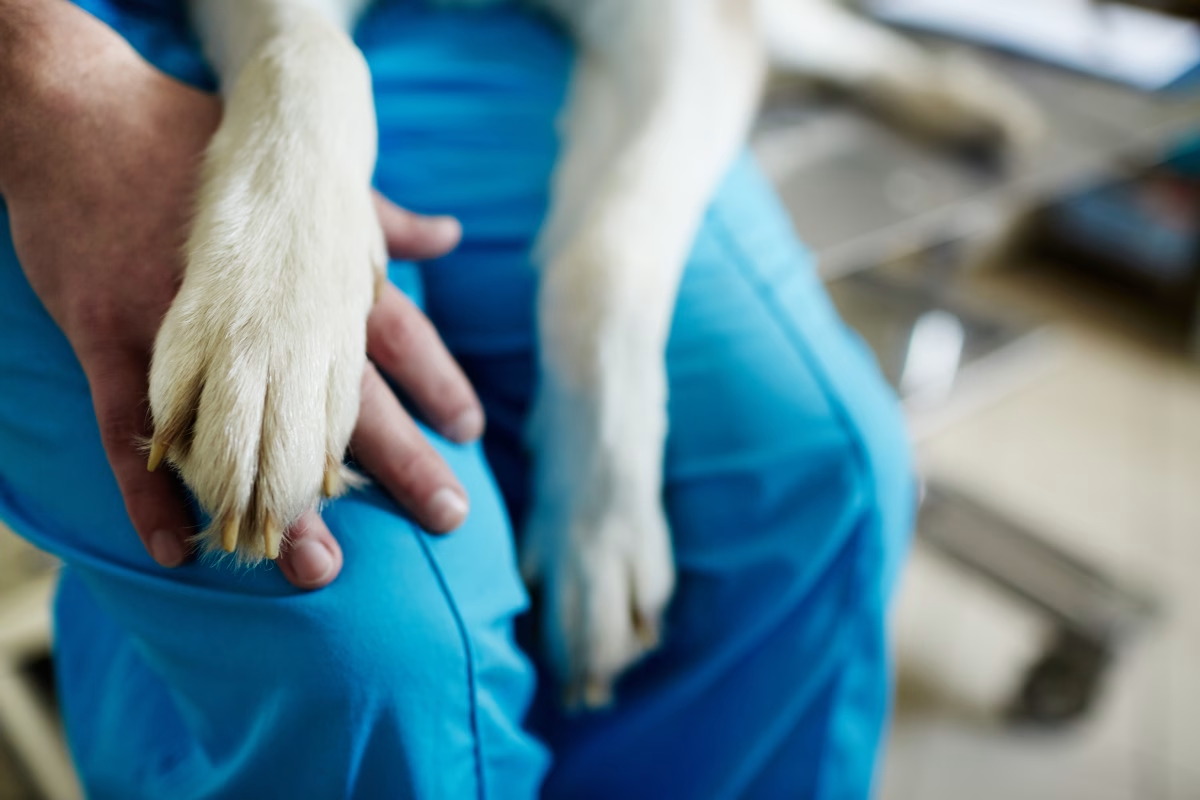
Arthritis is one of the most common and debilitating conditions affecting dogs, impacting their ability to move, play, and engage with the world around them. One study reports the prevalence of arthritis in 80% of dogs over 8 years old based on radiographic and clinical data.
Traditionally, the management of osteoarthritis (OA) has focused on symptom control using anti-inflammatory drugs, pain relief, supplements, and lifestyle modifications.
While these approaches can provide temporary relief, they often fall short in addressing the underlying pathology of joint degeneration.
Now, thanks to advances in regenerative medicine, there is a new frontier in veterinary care: stem cell therapy.
Stem Cell Vet is a leader in using cutting-edge regenerative techniques to help dogs regain mobility, reduce pain, and enjoy life again.
This article explores how stem cells work, what makes a dog a good candidate, how we deliver treatment, and what the evidence says about their effectiveness.
Our sole purpose is to give the dogs in our care a pain-free (comfortable) and mobile life
So many dog owners we see believe
"There's nothing else we can do,” or "He/she is just getting old."
At Stem Cell Vet, we don’t believe any dog should be in pain
In practice, this means helping early or late-stage, slow, painful,l or arthritic dogs become pain-free, mobile, and happy
What Are Stem Cells and Why Do They Matter?
Stem cells are the body's natural repair toolkit. Specifically, mesenchymal stem cells MSCs used in practice are found in fat and bone marrow and can transform or differentiate into various tissue types, including bone, cartilage, and muscle.
More importantly, they release a cocktail of powerful molecules that reduce inflammation, promote tissue healing, regulate immune responses, and stimulate the body’s own cells to repair damaged areas.
Implanting stem cells directly into the site of an injured or damaged joint stimulates them to transform into new cartilage, joint lining, and blood vessels, helping to repair and regenerate damaged tissue.
While it was once thought that stem cells worked primarily by becoming new tissue, we now also know that their true power lies in what scientists call the “paracrine effect” - the release of signals that orchestrate healing by influencing the environment of injured joints.
For this reason, MSCs have recently been rebranded in the human research literature as “ Medical signalling cells”.
In human medicine, Cristiano Ronaldo and Rafael Nadal, Kobe Bryant, and others have used stem cell therapy for joint conditions.
Why Arthritis in Dogs Is So Challenging
Canine osteoarthritis is a progressive, degenerative condition that affects an estimated 20% of dogs in the UK, with higher prevalence in older and larger breeds.
It often begins secondary to joint instability or trauma, such as hip or elbow dysplasia, cruciate ligament rupture, patellar luxation, or after surgery, and leads to chronic pain, stiffness, and loss of mobility.
Traditional treatment strategies—such as non-steroidal anti-inflammatory drugs (NSAIDs), weight control, supplements, monthly injections, and physiotherapy—can help manage symptoms, but they rarely reverse or slow the actual joint damage.
Stem cell therapy offers an exciting alternative by aiming to regenerate the joint environment itself, not just relieve its symptoms.
In essence, we inject stem cells (together with a combination of other helpful things like joint fluid replacement gel and platelet-rich plasma) directly into the joints, rather than just using oral medication or under-the-skin injections.
How We Treat Dogs with Stem Cells at Stem Cell Vet
Step 1: Careful Case Selection
Every dog we treat undergoes a comprehensive assessment, which includes:
- Comprehensive medical history review
- Owner-submitted videos
- Physical examination, including orthopaedic and neurological exam.
- Diagnostic imaging (X-rays, CT, or MRI if required)
- Use of validated scoring tools to assess quality of life and arthritis severity
We also work with the Canine Osteoarthritis Staging Tool and other clinical metrology instruments to decide if stem cell therapy is appropriate.
Step 2: Harvesting and Processing
For most cases, we collect a small sample of adipose tissue (fat) from the dog’s own body under general anaesthesia, usually from falciform (abdominal) stores.
This tissue is sent to our Veterinary Medicines Directorate-approved lab, where stem cells are isolated, cultured, tested for viability and sterility, and prepared for reimplantation into the arthritis joints, usually 3 to 4 weeks later.

Step 3: Preconditioning and Injection
Joints are often "preconditioned" with platelet-rich plasma (PRP) or autologous-conditioned serum to reduce inflammation and create a more hospitable environment for the incoming stem cells. This can enhance the therapeutic effect.
The stem cells are then injected directly into the affected joints under sterile conditions, sometimes guided by ultrasound. Depending on the case, we may treat one or multiple joints during the same procedure.
Beyond Stem Cells: The Multimodal Approach
At Stem Cell Vet, we rarely rely on stem cell therapy alone. We integrate it into a comprehensive treatment plan that may also include:
- Weight management
- Nutraceuticals like omega-3 fatty acids, turmeric, and green-lipped mussel
- Physiotherapy and hydrotherapy
- Pain modulation (gabapentinoids, NSAIDs, NMDA antagonists)
- Lifestyle, environmental, and travel adjustments
- Acupuncture and laser therapy
This holistic approach has yielded excellent results in both early and advanced OA cases.
Real Dogs. Real Results.
We’ve seen remarkable recoveries in almost 1500 dogs we have treated to date. Take Willow, an 8-year-old Golden Retriever with chronic lameness and elbow arthritis following on from elbow dysplasia.
After a series of stem cell and PRP injections, her owners reported a dramatic improvement, allowing her to return to long walks and play. Or Peppa, a rescue Staffie with advanced arthritis in six joints, who came to us hardly able to walk and became significantly more mobile and pain-free post-treatment.
Kiki, a 2 year old chow with arthritis in her elbows and knees and severe hip dysplasia in her left hip was treated with stem cells and Platelet rich plasma in all six joints, becoming pain free and medication free.
Munchy, a 6-year-old border collie, was slowing down in her agility trials. Just three weeks after treatment with us in her left elbow and left forepaw, she ran the fastest time at Olympia and six months later won two gold medals at the world agility championships.
Before and after videos of these and many more can be seen on our website.
These are not isolated cases. A retrospective study of 245 dogs treated with autologous mesenchymal stem cells showed statistically significant improvements in pain, function, and mobility—many of them considered “untreatable” by referring vets.
What Does the Science Say?
The evidence base is growing. Multiple peer-reviewed studies have demonstrated:
- Reduction in pain and lameness scores
- Improved joint function
- Delayed radiographic progression of arthritis
- Low incidence of adverse effects
One systematic review concluded that intra-articular injection of adipose-derived stem cells is safe and effective for hip arthritis following hip dysplasia in dogs. Importantly, stem cell therapy is also well tolerated, even in older patients.
Dr Halperin has published 3 double blind peer-reviewed papers in a companion animal journal at the start of 2025, describing a complete systematic overview of stem cell therapy in dogs.
Is It Safe?
Yes—but as with any medical intervention, there are risks. These include:
- Surgical site infection (from tissue harvesting)
- Anaesthetic complications
- Temporary joint flare after injection
- Very low risk of adverse immune response with allogeneic cells
What Happens After Treatment?
Recovery includes:
- 48 hours of strict rest
- Gradual return to controlled exercise
- Physiotherapy or hydrotherapy
- Adjustments to the home environment (ramps, rugs, etc.)
- Follow-up assessments every few months
- Rechecks by phone, video call, or in person, depending on the dog’s needs throughout the rest of the patient’s life.
Many dogs improve significantly within 2–6 weeks, with results lasting from 18 months to several years, depending on the stage of disease, joint(s) involved, and whether concurrent treatments are used.
The majority of dogs treated at Stem Cell Vet do not need repeat treatments, although all our patients' stem cells are stored for life in case top-ups are required.
The Future of Canine Regenerative Medicine
As veterinary medicine continues to evolve, stem cells will play an increasingly central role in managing chronic diseases like arthritis.
Researchers are exploring new sources of stem cells, improved delivery systems (such as hydrogels), and synergistic combinations with biologics like PRP, ACS, and even gene therapy.
At Stem Cell Vet, we are committed not only to treating dogs but also to advancing the science. Our research contributions and participation in veterinary trials ensure that what we offer is grounded in evidence-based practice.
Conclusion: A Better Way Forward
For decades, managing canine arthritis meant a long, frustrating road of pain meds, limited mobility, and heartbreaking decisions. Today, thanks to regenerative medicine and stem cell therapy, we can offer hope.
We can offer healing. And most importantly, we can offer dogs a chance to live fuller, more joyful lives.
If your dog—or your patient—is struggling with arthritis, know that there is more that can be done. With stem cell therapy, we’re not just masking symptoms—we’re treating the root of the problem.
About the Author
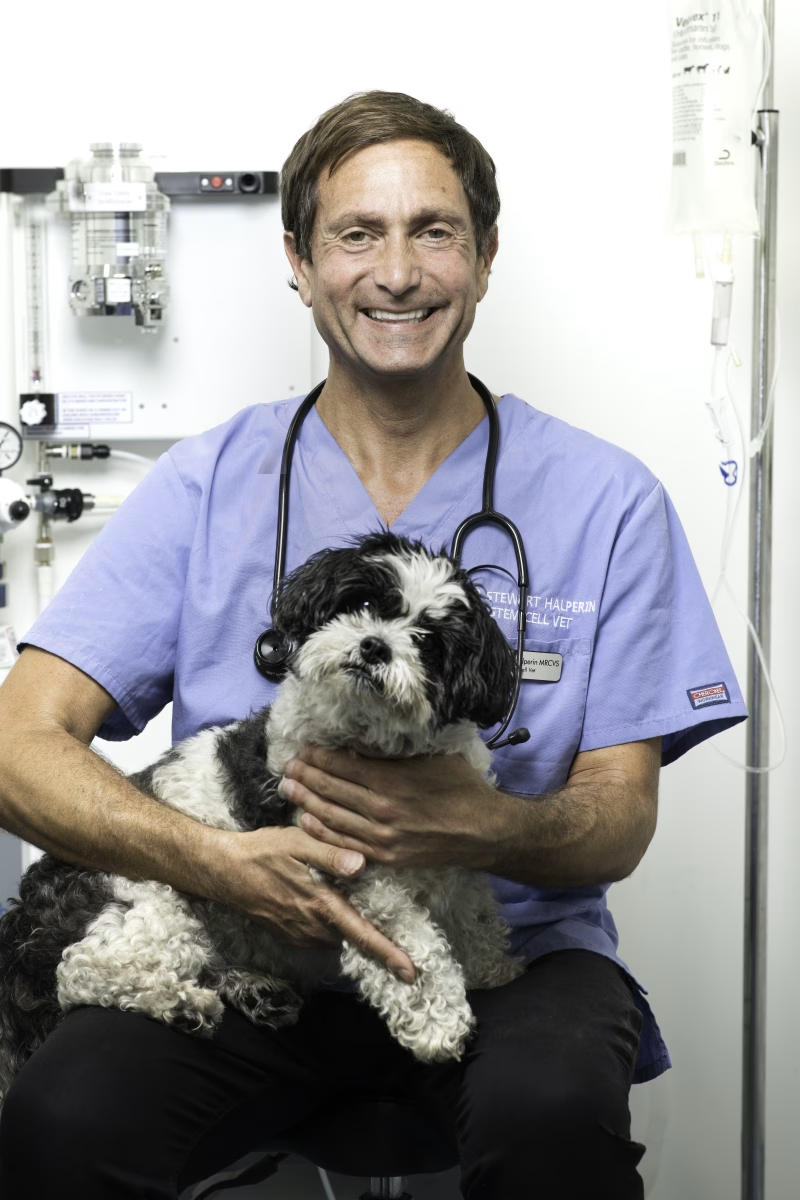 Dr Stewart Halperin BVMS MRCVS ACIARB is the Clinical Director of Stem Cell Vet, a dedicated regenerative medicine practice based in Somerset, UK.
He is a leader in the clinical application of stem cell therapy in companion animals and has authored multiple peer-reviewed articles on the subject.
Dr Halperin’s mission is to improve the quality of life for dogs with arthritis and chronic pain through innovative, evidence-based treatments.
He regularly speaks at veterinary conferences and collaborates with referring vets across the UK.
